A boat on an ordinary morning in Varanasi costs a few hundred rupees. The same boat on the night of Dev Deepawali costs many times that, and people are frequently shocked by the difference.
The reason is not opportunism, or not entirely. It is that the number of boats permitted on the water that night is fixed by the district administration and does not rise with demand, while something over a million people arrive wanting to be on one. This page explains what actually sets the price, what you should be getting for it, and how the figure moves depending on when you book.
Why the price is what it is
Three things drive it.
Supply is capped. The administration limits how many boats may operate on Dev Deepawali night, for safety reasons that are entirely sensible given the numbers on the water. That cap is the whole story. No amount of demand produces another boat.
The boat works one trip. On an ordinary day a boatman runs several trips. On Dev Deepawali he takes one group out in the afternoon and they stay aboard until the evening ends. A day's earnings has to come from a single sailing.
Position has to be held. A boat with a view of the aarti and the illuminated ghats has to be in place hours before dusk, which means going out early and waiting. Boats that arrive late are behind everyone else, and that is the difference between the two experiences people describe afterwards.
What determines your price
Shared or private. A seat on a shared boat is the cheaper option and the one most visitors take. A private boat for a family or a group costs considerably more and is the difference between a good evening and a comfortable one.
The boat itself. A small rowing boat, a larger motorboat with proper seating, and a bajra — the big traditional wooden vessel — sit at very different prices. Comfort matters more than usual here because you will be aboard for four or five hours rather than one.
Where it sits. Boats near Dashashwamedh during the aarti cost more than boats further along the river. Both see the illuminated ghats. Only one sees the ceremony.
When you book. This is the largest single factor and the one entirely within your control.
The booking curve
The same seat costs very different amounts depending on the month you arrange it.
August and September — boats are available at a fair rate and you can choose position and vessel. This is when sensible bookings are made.
October — availability tightens noticeably, prices firm up, and the better positions are gone.
Early November — you are choosing from what remains. Prices are considerably higher and choice is limited.
The final week — whatever is left, at whatever is being asked. In some years there is nothing left at all.
On the day, at the steps — this is where the numbers become absurd, and where most of the horror stories originate. A price is agreed at the ghat, and once you are aboard it becomes a price per person, or the route becomes shorter than described, or a further sum is expected before you are brought back in.
The single most effective thing you can do about the cost of a Dev Deepawali boat is to book it three months early.
What a cheap boat actually costs you
Some savings are real and some are not. The ones that are not tend to look like this.
An overloaded boat. Where operators are unregulated and demand is extreme, boats carry more people than they should. On a night when the river is crowded with vessels in the dark, this is a genuine safety matter rather than a comfort one.
A position behind everything. You are on the water, and you are looking at the back of other boats.
A price that moves. The figure quoted at the steps is not always the figure asked for at the end, and mid-river is a poor place to negotiate.
No boarding help. The roads close, the vehicle cannot reach the ghats, and finding your boat in a crowd of several hundred thousand people with no one to walk you in is where most of the evening's difficulty sits.
What you should be getting
Before you pay anyone, ask these and get the answers in writing:
- Is this figure for the boat or for each person?
- Where exactly will the boat be positioned, and will the aarti be visible?
- What time do I board, and where?
- How many people will be on the boat?
- Does the price include GST?
- Is anything payable on the day?
- What happens if boating is suspended?
An operator who answers the first, third and last of those clearly is probably fine. One who is vague about all three is telling you something.
Why the boat rather than the ghat
It is worth being clear that a place on the steps is free, and for some people that is the right choice. But the festival is built to be seen from the river, and this is not a matter of preference.
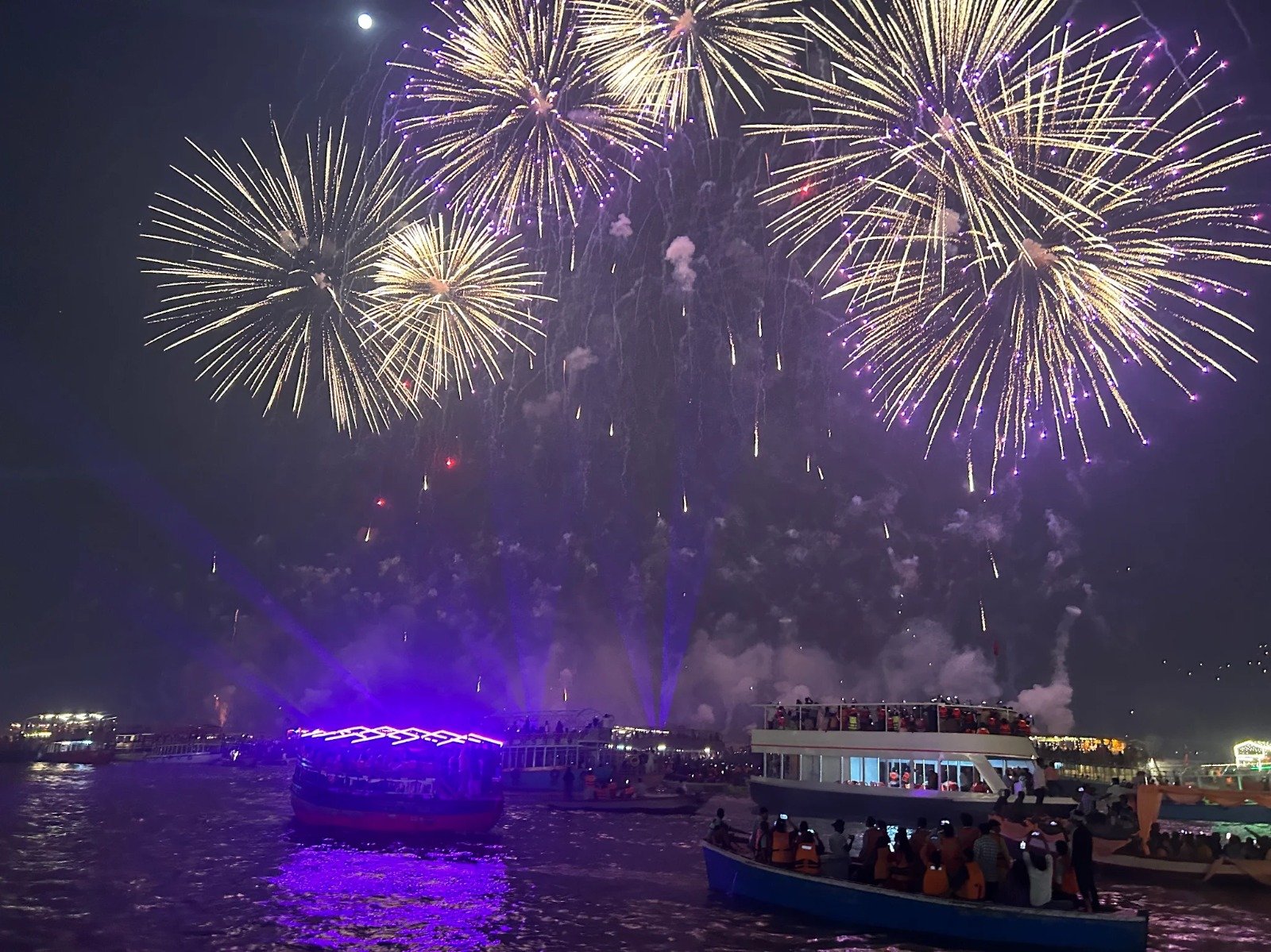
The lamps are set in rows facing the water. The aarti is performed towards the water, because it is an offering to the Ganga. The floating lamps are on the water. The fireworks go up over it.
From the ghat you see the ghat you are standing on, in a crowd of several thousand, in the dark, unable to move until the crowd releases you. Groping in dense crowds is a real problem on this night, and the crush is difficult for anyone elderly or with children.
From a boat you see the whole illuminated crescent at once, seated, in front of the ceremony rather than behind it, with the floating lamps drifting past you — and you leave when you choose rather than when the crowd allows it.
For families travelling with elderly parents, the boat is not a luxury. It is the only version of the evening that is actually manageable.
What we charge
Four options, priced before you book, GST included.
- Shared seat — ₹3,599 per person. Suits solo travellers and couples happy to share a small boat with a few others
- Private boat, up to 5 — ₹36,000. A family or small group wanting the boat to themselves
- Private boat, up to 10 — ₹45,000. Larger families and groups, and our most booked option for this night
- Private double-decker bajra, up to 15 — ₹2,00,000. Two decks and the best vantage on the river, entirely yours
Work out the per-head figure before you decide
The comparison people usually make is shared against private, and at small numbers the shared seat wins easily. At larger numbers it does not, and this catches families out.
A boat for ten at ₹45,000 works out to ₹4,500 each — about nine hundred rupees a head more than a shared seat. For that difference the boat is yours, you decide where it sits and how long it stays, and nobody else's schedule governs your evening. This is why it is the option we book most often for this night.
At five people the same private boat is ₹7,200 each, which is a real premium rather than a marginal one. Below about eight travelling together, the shared seat is usually the sensible choice.
What the shared seat actually means
Worth being plain about, because the word means very different things depending on who is selling it.
You are booking one seat on a small boat carrying a handful of other guests who booked the same way — a few couples, a family, a solo traveller or two. Not a deck of forty and not a cruise of a hundred. You can move around and reach the rail.
The schedule is fixed. The boat boards at a set time, follows one route and returns when the evening is done, and everyone aboard is on the same timing. The view is identical to the private boats — same night, same river, same ghats, same aarti, same life jackets and water and diyas. What costs more on a private boat is control, not the view.
The shared seat suits solo travellers and couples. It suits less well anyone bringing elderly parents or small children, anyone who wants to choose when to stop and for how long, and anyone for whom this night is the occasion rather than part of a longer trip.
What every option includes
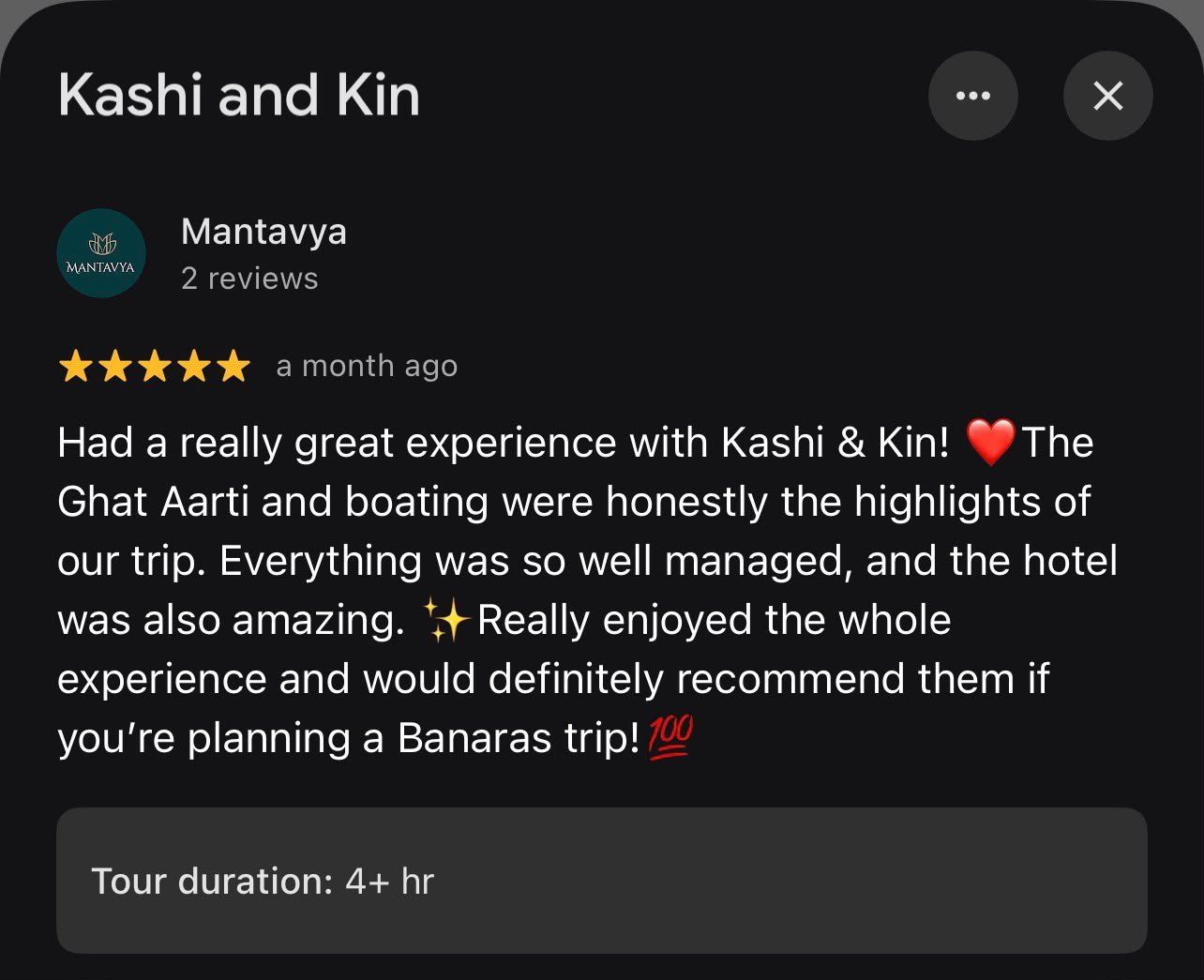
One figure, settled before you arrive in Varanasi, so nothing is collected at the ghat and nothing is asked for on the boat. The number does not change on the night, which on the one evening of the year when prices at the steps run to several times the ordinary rate is the entire point of booking in advance.
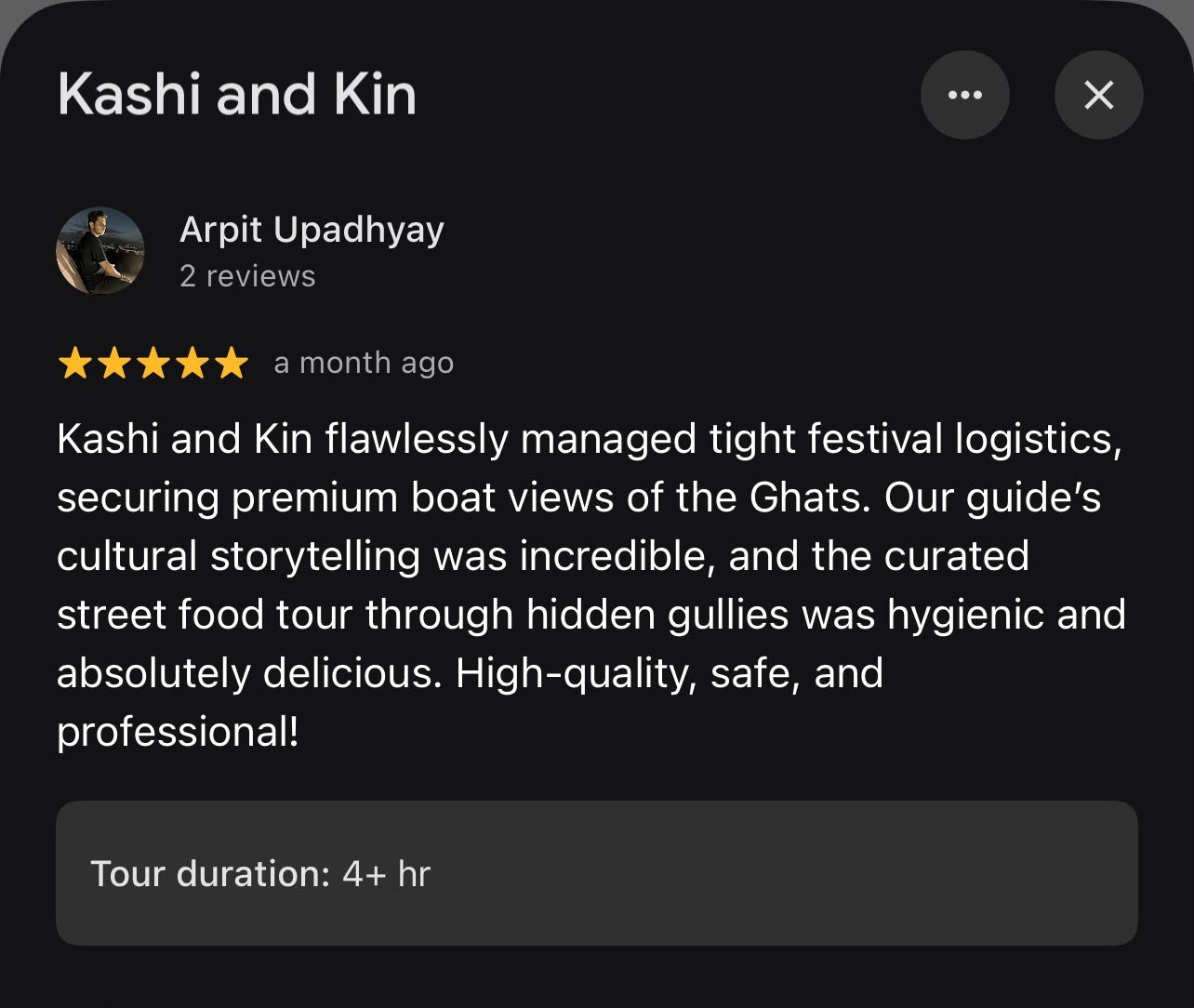
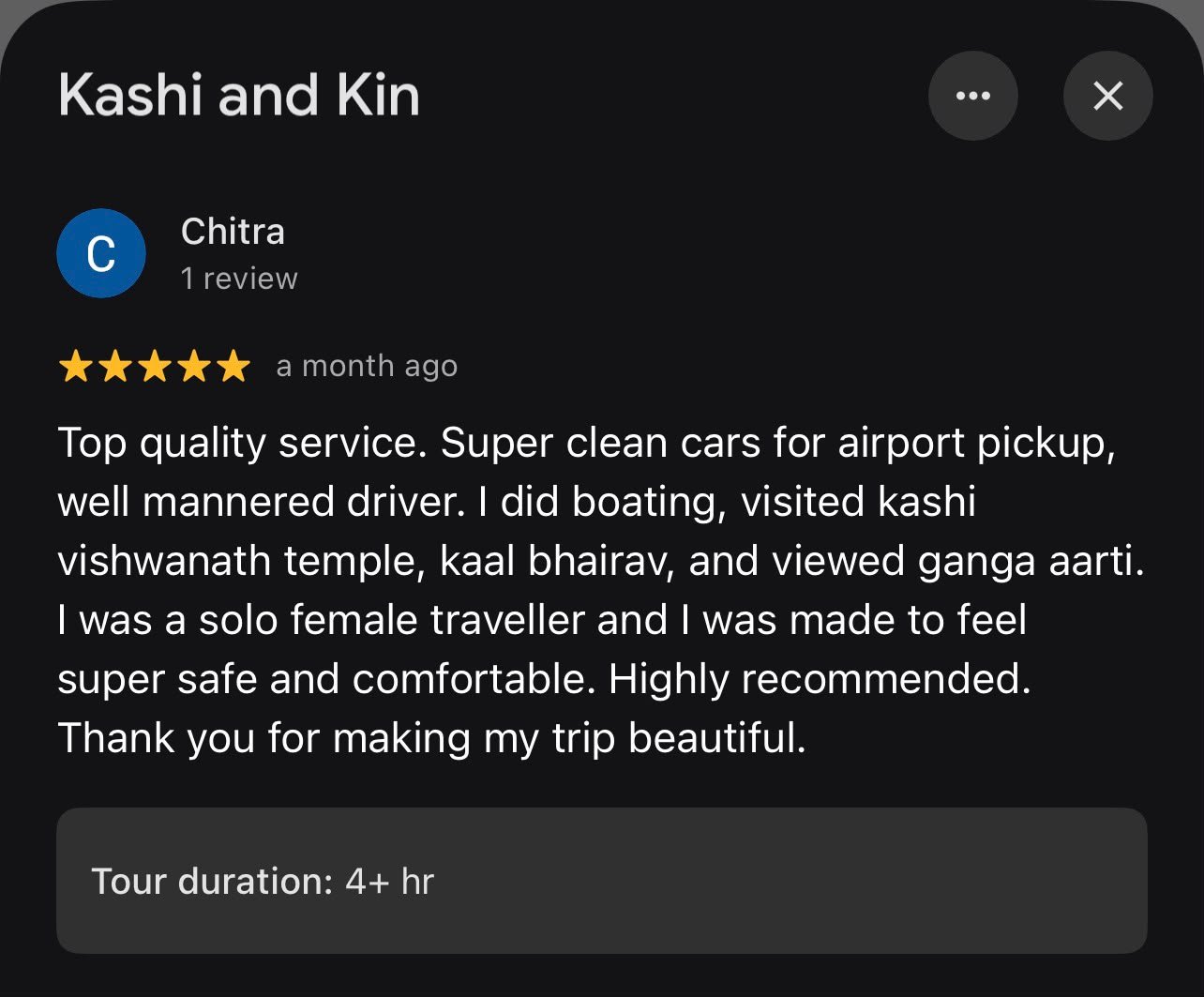
The figure covers the boat and its position, someone to meet you and walk you in through the road closures to your boarding point, a Sāthi to tell you what you are watching, and the car to and from your hotel at both ends.
The boarding escort is the part guests mention most afterwards. Anyone can sell a seat. Being walked to it through closed roads by someone who knows which approach is open that particular evening is the thing you cannot arrange for yourself on the day.
Booking
Dev Deepawali 2026 falls on Tuesday, 24 November. Rates, boat options and availability are on our Dev Deepawali boat booking page.
If you are still deciding, our guide to when to book for Dev Deepawali covers what runs out and in what order, and what Dev Deepawali is explains the festival itself.