Why Ramnagar is worth crossing the river for
Most visitors to Varanasi never leave the western bank. That's understandable — the old city, the ghats, and the temples are all there. But Ramnagar, a short crossing away, offers something the main city doesn't: quiet, scale, and a window into how Varanasi's ruling family lived for three centuries.
The Maharaja of Varanasi — formally the Kashi Naresh — is not a ceremonial title in the way many princely-era dignities have become. The family still lives in the fort, still observes the rituals that have defined Kashi for generations, and still patronises the Ramleela every October the way their ancestors did. Visiting Ramnagar is one of the few places in India where you can walk into living royal history rather than a preserved museum version of it.

What to see at Ramnagar
The centrepiece
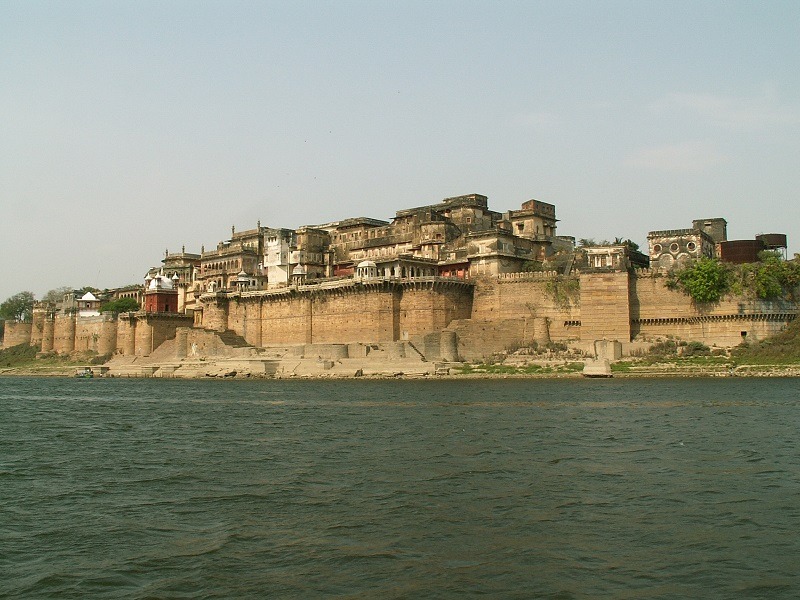
Ramnagar Fort
Built in the 18th century by Maharaja Balwant Singh using the distinctive cream-coloured Chunar sandstone, the fort sits on a raised bluff directly above the river. The architecture blends Mughal and Benarasi styles — ornate balconies, arched gateways, and carved screens overlooking the Ganga. The inner courtyards are quieter and more atmospheric than the heavily visited forts in Rajasthan, partly because Ramnagar remains genuinely off the main tourist circuit.
Don't miss
Ramnagar Museum
The museum within the fort holds the royal collection: vintage Cadillacs, Buicks and Mercedes from the 1920s–40s (the Maharajas of Varanasi had an early love of automobiles); ornate elephant howdahs and silver palanquins; Mughal-era swords, shields, and flintlock weapons; ivory carvings; and a collection of astronomical instruments. It's an eccentric, absorbing collection — the kind you'd expect from a family that ruled a major city for three hundred years and collected whatever interested them.
If you come in October
Ramnagar Ramleela
For thirty days each October, the entire town of Ramnagar becomes a stage for the Ramcharitmanas. Different episodes are performed at different locations around town each evening — the Lanka set, the forest set, the royal court — and audiences follow on foot, often in the thousands. The Maharaja traditionally watches from an elephant-drawn palanquin. It's one of the oldest uninterrupted theatrical traditions in India, and it bears almost no resemblance to the tidy, two-hour Ramleelas performed elsewhere. Book accommodation well in advance if your dates fall in October.
Practical information
| Location | Eastern bank of the Ganga, ~14km from Varanasi city centre |
| By car | 30–40 min via Lanka Bridge; traffic can extend this in peak hours |
| By boat | ~20 min river crossing from Tulsi/Assi Ghat — atmospheric, and skips the bridge traffic |
| Time needed | 2–3 hours for fort and museum; longer during Ramleela season |
| Museum entry | ₹15 Indians / ₹150 foreign nationals |
| Museum hours | 10 AM – 5 PM; closed on Fridays |
| Best season | October–November (Ramleela + pleasant weather); pleasant Oct–March |
| Photography | Permitted in the courtyard and exterior; restricted in some museum galleries |
Frequently asked questions
How far is Ramnagar Fort from Varanasi?
About 14km by road via Lanka Bridge — 30–40 minutes by car. Alternatively, a 20-minute boat crossing from the southern ghats (Assi or Tulsi Ghat) is faster and more scenic.
What is inside Ramnagar Fort?
The Ramnagar Museum, with the royal collection: vintage cars from the 1920s–40s, elephant howdahs, palanquins, Mughal weapons, ivory carvings, and astronomical instruments. The fort also has a Vyas Devta temple and a Durga temple within its complex.
What is the Ramnagar Ramleela?
A month-long theatrical performance of the Ramcharitmanas staged across the whole town of Ramnagar each October, traditionally patronised by the Maharaja of Varanasi. Different episodes are performed at different outdoor locations each evening, with audiences following on foot. One of India's oldest continuous Ramleela traditions.
Is Ramnagar worth visiting without the Ramleela?
Yes. The fort, museum, and river crossing make it a worthwhile half-day trip in any season. October is exceptional, but the fort is absorbing year-round — it's just quieter outside Ramleela season, which some visitors prefer.