Every account of Dev Deepawali describes the same thing — a million lamps, seven kilometres of riverfront, the most beautiful night in Varanasi. All of it is true and none of it prepares you for how the evening actually goes, which is why this is written from the water rather than about it.
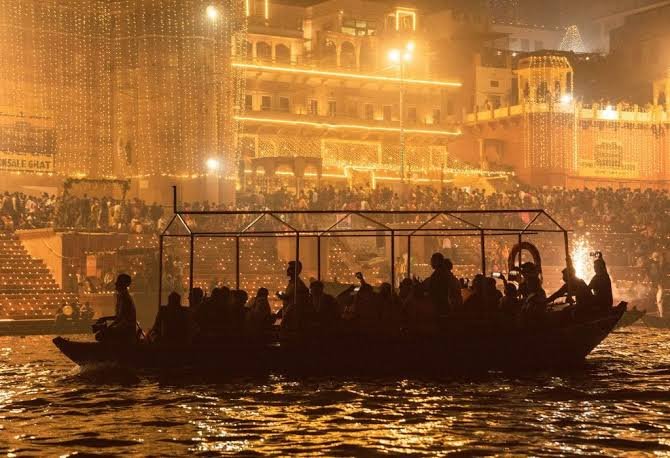
These photographs are from last year, taken by guests we took out on the night.
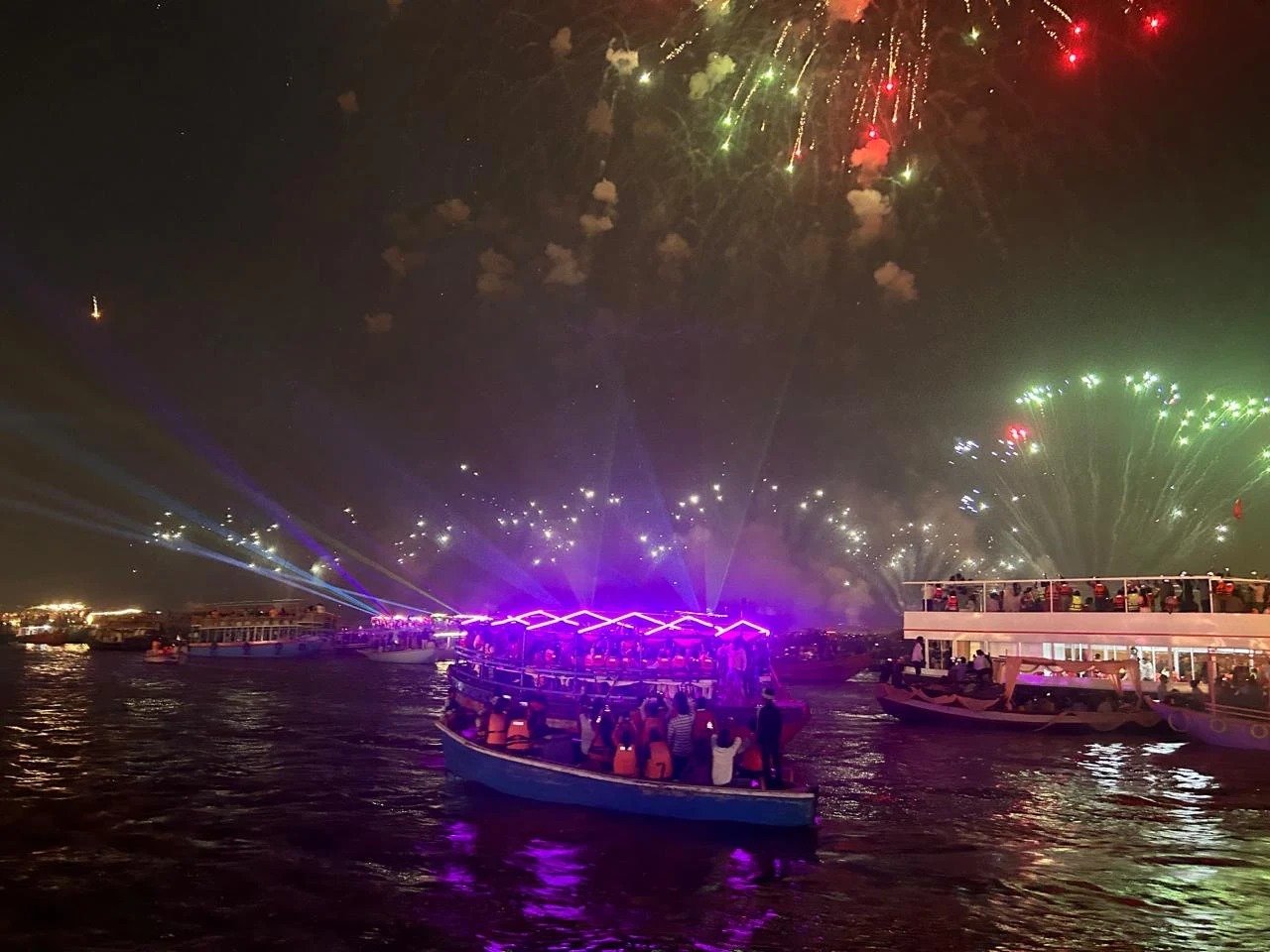
Dev Deepawali 2025, from the river.
The afternoon is the part nobody photographs
The evening does not begin at dusk. It begins in the middle of the afternoon, several hours before there is anything to look at, because by four o'clock the city has already closed around the river.
Roads across the old city are shut by the police, and the closures change from year to year and are announced late enough that knowing last year's route helps very little. No vehicle reaches the ghats. Whatever your driver tells you, the car stops on the outer ring and the rest is on foot, sometimes a kilometre or more, through a crowd already thick enough to move at its own pace rather than yours.
Then there is the boarding. Boats need to be in position before the ghat steps fill, which means guests are aboard by three or four in the afternoon, and after that the steps are effectively impassable. People who plan to arrive at six do not arrive at six.
So the walk in is the whole logistical problem of Dev Deepawali, and it is solved by having someone with you who knows which approach is open that particular evening and where the boat is waiting. That sounds like a small thing in September. At four o'clock on the day it is the only thing.
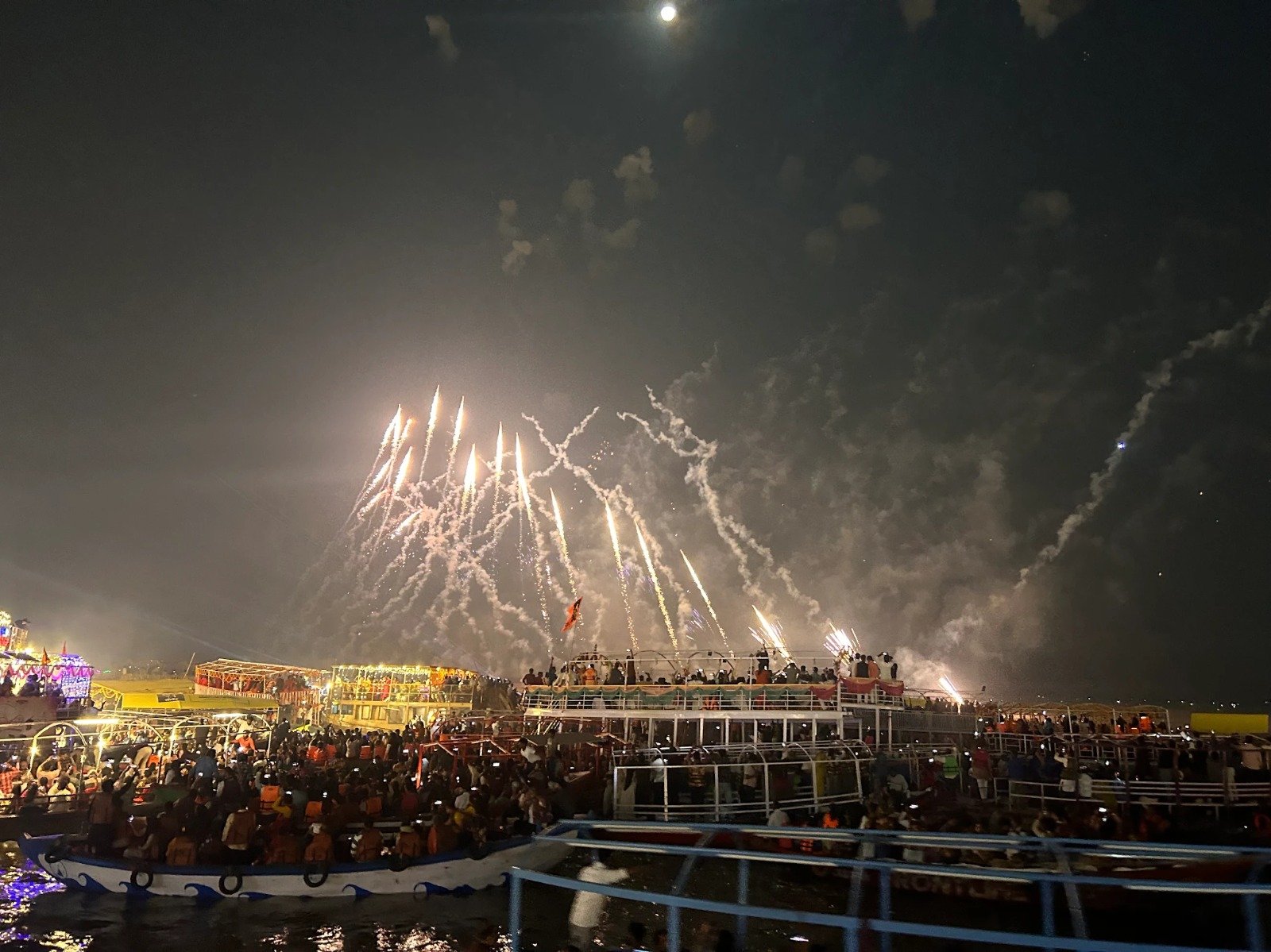
Boarding, while the steps are still passable.
Waiting on the water
There is then a long, strange, rather good hour of nothing much happening. The river fills slowly with other boats. The ghats fill faster. The light goes flat and then gold, and the lamps are still unlit, sitting in their rows down the steps in the thousands, waiting.
Guests almost always say afterwards that they had expected this part to be tedious and that it was not. You are sitting on a river in the late afternoon watching a city prepare for something, which is a form of anticipation that does not survive being hurried.
The lighting
Then, around quarter past five, the lamps go up — not all at once but in a spreading wave along the bank as volunteers and families and temple committees work down their own stretch of steps.
This half hour is the best of the evening and it is the half hour most people miss, because from the ghats you can only see your own section of it. From the water you watch the light travel.
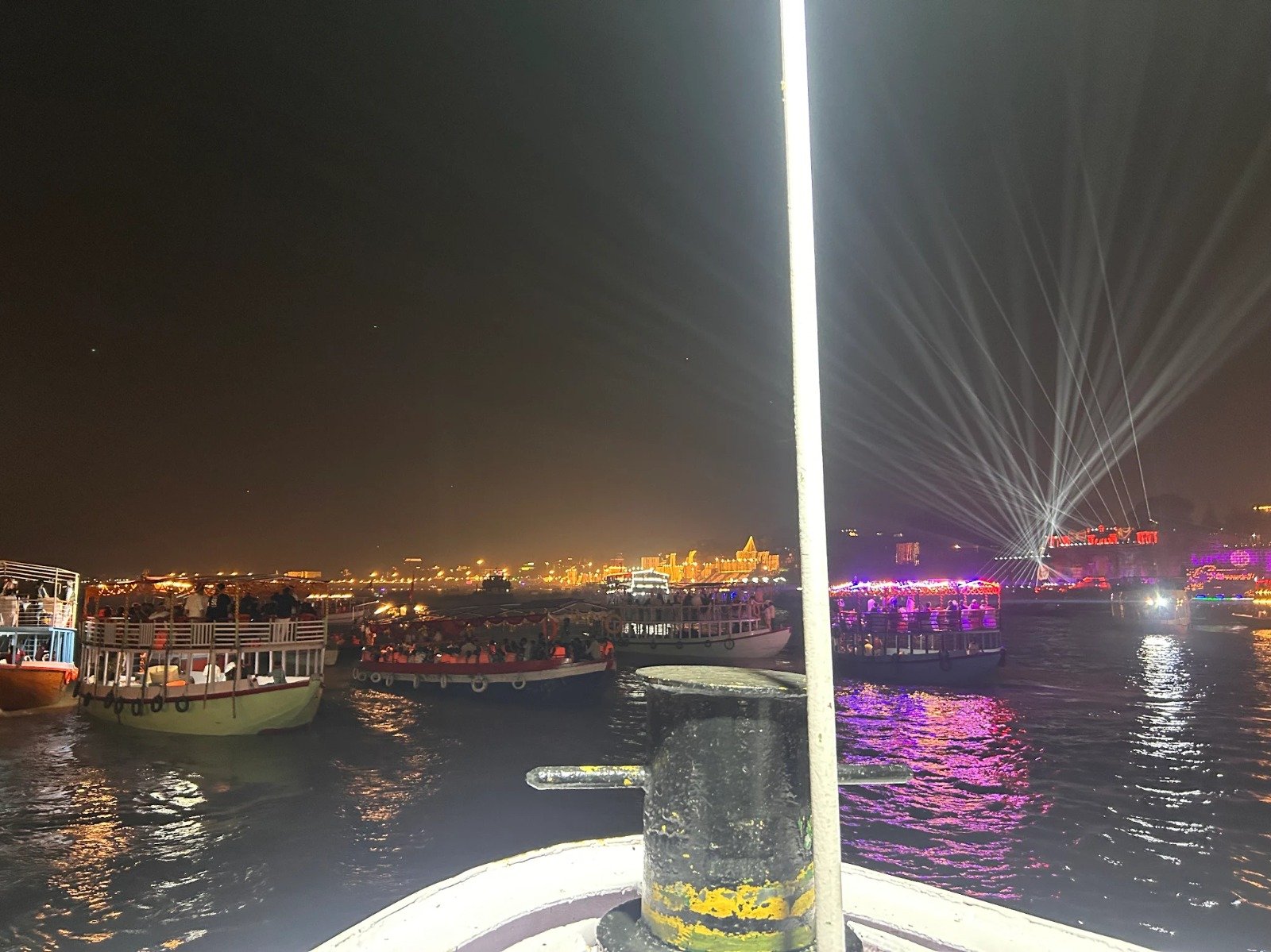
The full crescent, once the lamps are lit.
Why the water and not the steps
It is worth understanding that this is not a preference. The festival is built to be seen from the river.
The lamps are set facing the water. The aarti is performed towards the water, because it is an offering to the Ganga. The floating lamps go out onto the water. The fireworks go up over it. Nothing about Dev Deepawali is arranged for the convenience of a person standing on the steps, and from the steps you get the ghat you happen to be on, in a press of several thousand people, in the dark, unable to move until the crowd releases you.
From a boat you are seated, in front of the ceremony, at the distance it was designed to be seen from, with the whole illuminated crescent in view — and you can leave when you decide to rather than when the crowd allows it.
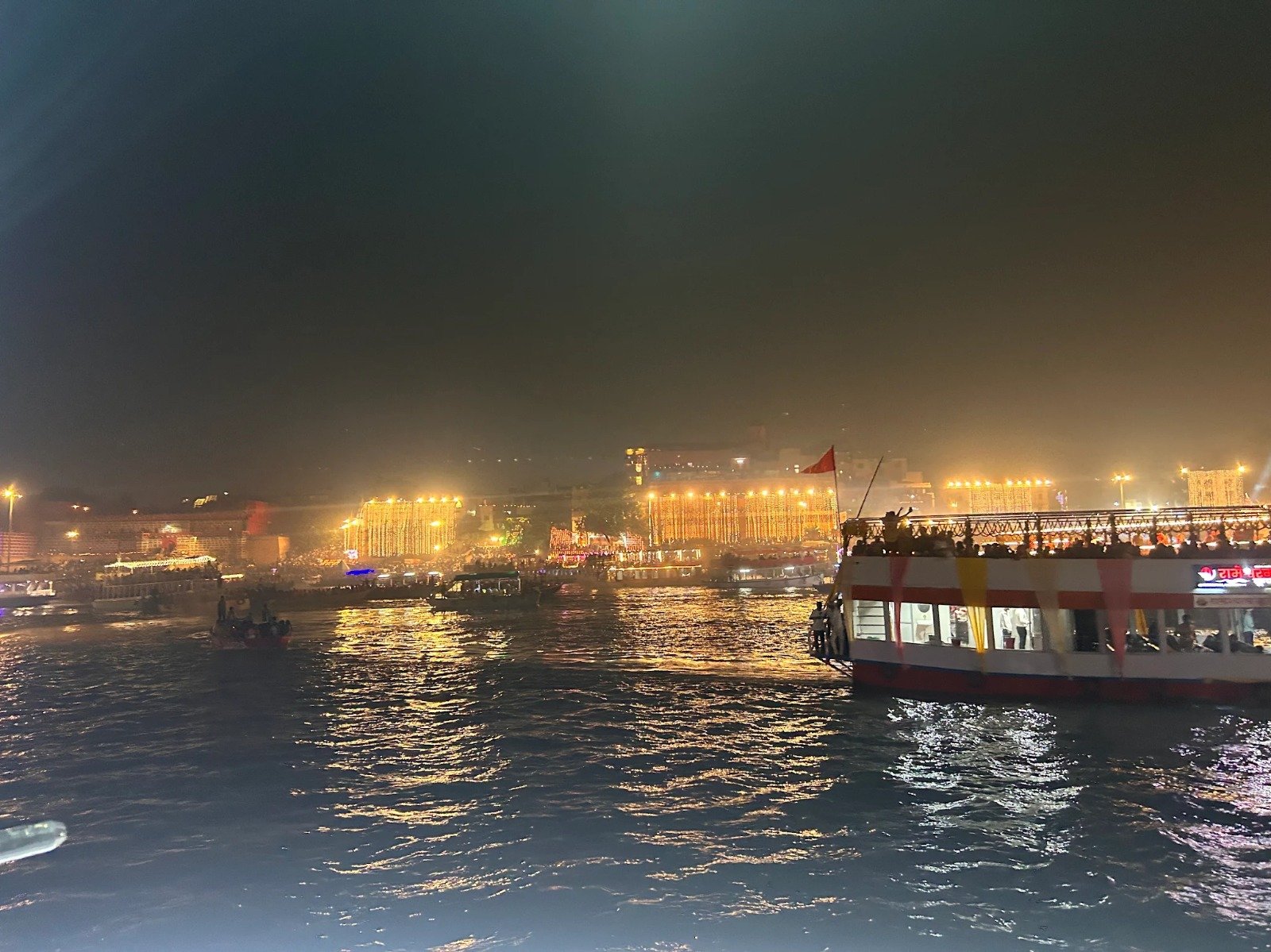
The special Ganga Aarti, watched from the water.
What is actually happening
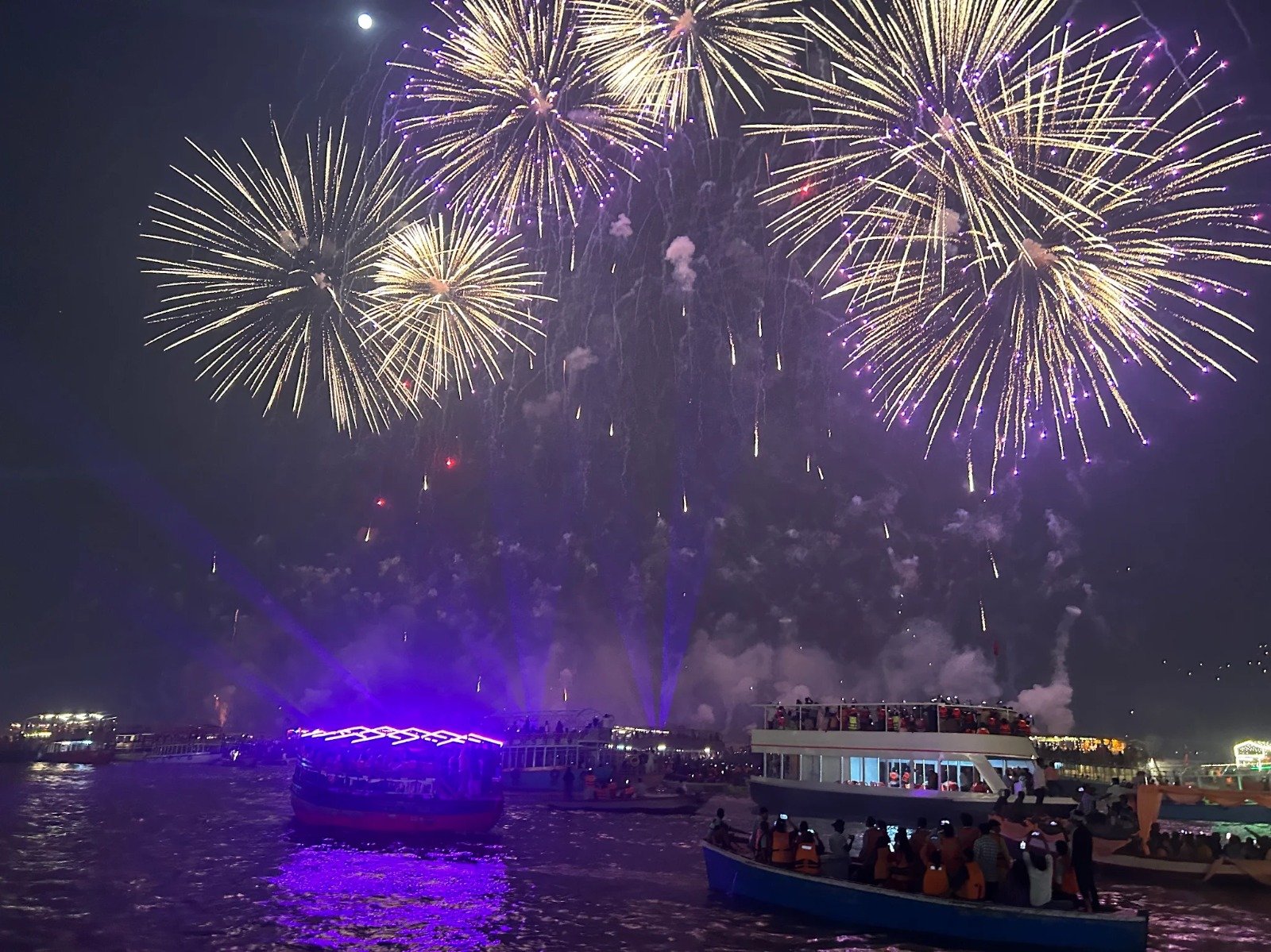
The aarti begins around six, performed at several ghats at once rather than only at Dashashwamedh. People begin setting single lamps adrift on leaf boats, which is called deep daan, the giving of light, and they drift past you in ones and twos and then in a slow scatter across the whole river. There are laser and projection displays at Chet Singh Ghat and near Lalita Ghat, and fireworks over the sands on the far bank at about eight.
What none of it announces is why. The festival marks Lord Shiva's destruction of Tripura, the three flying cities, and the belief that the gods themselves descend to Kashi on this full moon to bathe in the Ganga. The lamps are lit to welcome them — not for anyone watching, but for guests who are believed to be arriving.
Knowing that changes the evening considerably, and there is nobody to ask on a crowded boat unless you brought them with you.
Deep daan, the giving of light.
Getting out
The exit is harder than the entry and almost nobody plans for it. When the fireworks finish, several hundred thousand people leave at once, through lanes built for far fewer, in the dark, and the mobile networks in the old city stop working entirely under the load.
Which means anything you have not agreed before you set out, you cannot agree afterwards. A meeting point named precisely — a landmark, not "near the ghat" — and a driver whose number you already have, decided that morning, is the difference between forty minutes and two hours.
If you are coming this year
Dev Deepawali 2026 falls on Tuesday, 24 November.
The number of boats permitted on the water is capped by the administration and does not expand with demand. Boats arranged in September go at an ordinary price. Boats arranged in the second week of November are whatever remains, at whatever is being asked on the day, and some years there is nothing left at all. This is the one part of the festival worth acting on early.
We arrange the evening as a single booking — the boat and its position, someone to walk you in through the closures to your boarding point, a Sāthi to tell you what you are watching, and the car at both ends. It is priced before you book, GST included, and settled before you arrive, so nothing is asked for at the ghat or on the boat on the one night of the year when prices at the steps run to several times the normal rate.
Details and pricing are on our Dev Deepawali tour package.
If you are still working things out, our guide to when to book for Dev Deepawali covers what runs out and in what order, and what Dev Deepawali is explains the festival itself.