What Dev Deepawali actually is
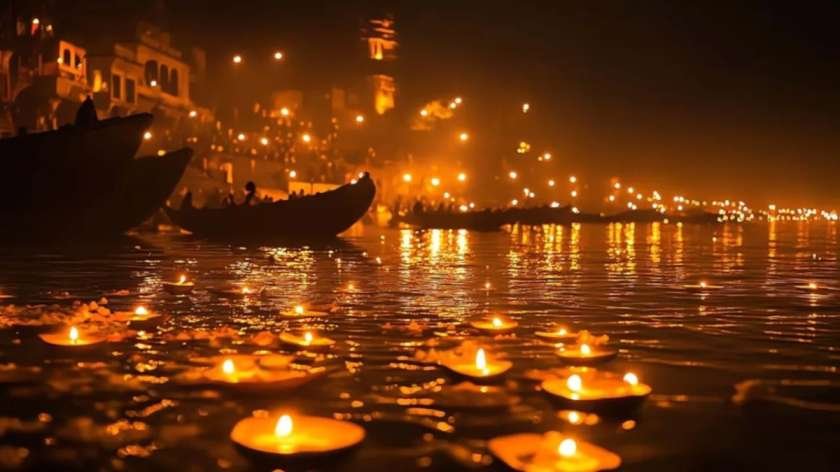
Dev Deepawali means "the Diwali of the Gods." The story behind it: the demon Tripurasura had grown powerful enough to torment the heavens, and on the full moon of Kartik, Shiva destroyed him. In celebration, the gods themselves descended to Kashi — Shiva's own city — and lit lamps along the Ganga. Every year since, on Kartik Purnima, the city lights the lamps to welcome them back.
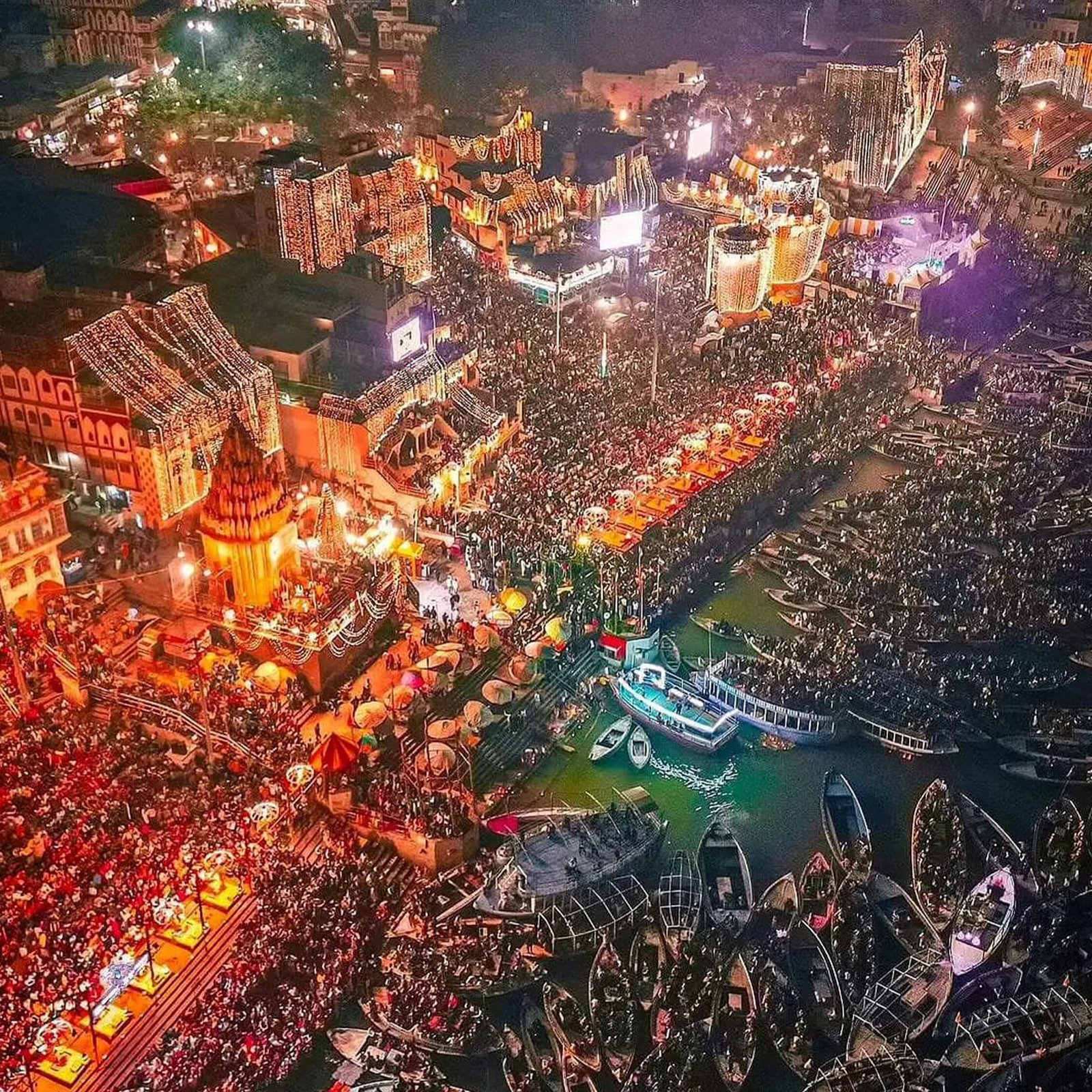
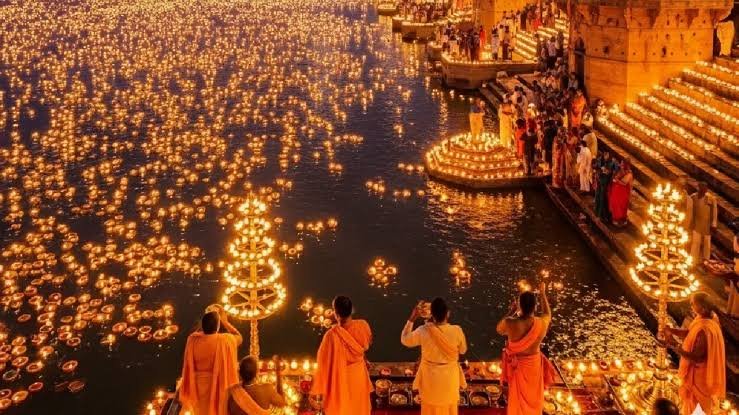
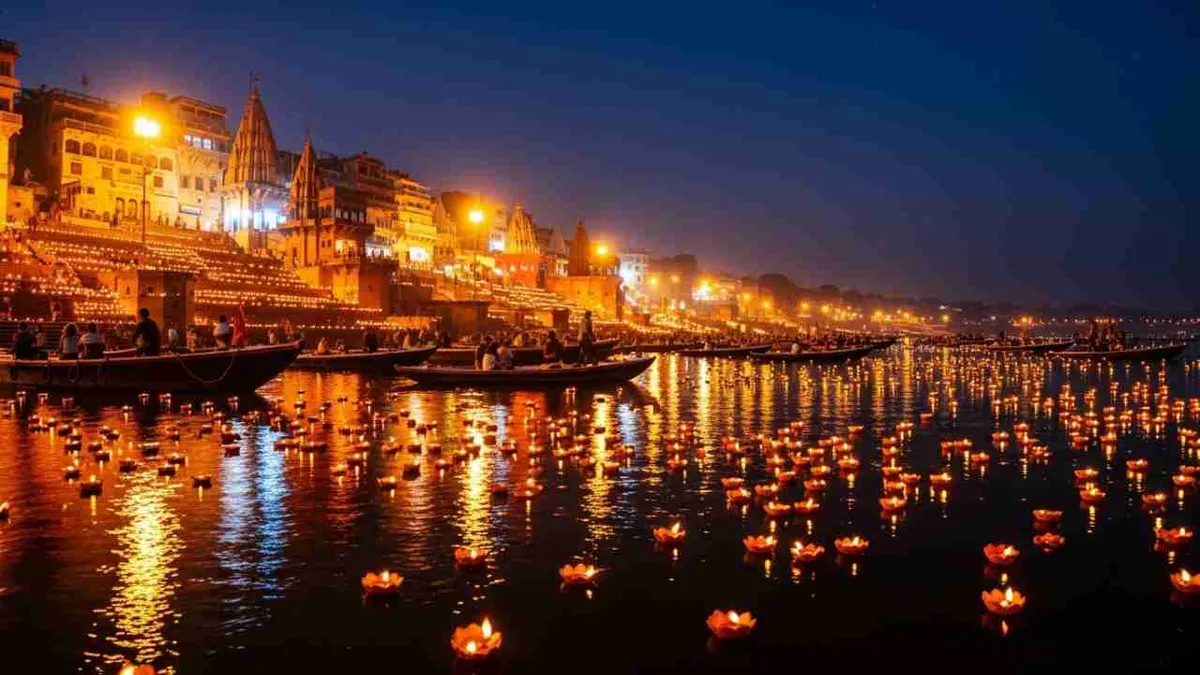
Unlike Diwali, which is celebrated at home with family, Dev Deepawali happens in public, on the river. Volunteers, students, temple committees and ordinary families spend the whole day setting out diyas on the ghat steps — and at dusk, in a slow wave moving along the crescent, all of them are lit. The hymn-singing, the great aartis, the laser and light shows and the fireworks follow. If Varanasi has one night that justifies the phrase "City of Light," it is this one.
The date, and the timings that matter
Dev Deepawali 2026 falls on Tuesday, 24 November 2026. The festival follows the lunar calendar — Kartik Purnima — so the date shifts each year, always landing fifteen days after Diwali, in November or early December.
Be in position. Roads near the river close to vehicles in the afternoon and the ghats fill fast. If you have a boat, know your boarding point in advance.
Sunset. The first lamps are lit and the wave of light spreads down the riverfront — for many people, the most moving moment of the whole night.
The great Ganga Aarti at Dashashwamedh Ghat, mirrored by aartis at Assi and other ghats — larger and longer than on any ordinary evening.
Light-and-sound projections and laser shows (in recent years at Chet Singh Fort and around Kashi Vishwanath), with fireworks over the river.
Crowds thin slowly. The lamps burn down. The city glows until well past midnight.
Exact aarti and show timings are announced by the district administration close to the date — we update this page as they're confirmed.
Where to watch: ghat by ghat, or from the water
Dashashwamedh Ghat
The centre of gravity — the grandest aarti, the biggest crowds. Spectacular, but you must claim your spot hours early and be comfortable in a very dense crowd.
Assi Ghat
The southern anchor, with its own full aarti. Noticeably calmer than Dashashwamedh while still completely lit and alive — a good choice for families and older travellers.
Other good vantage points
The upper balconies and rooftops of riverfront havelis and hotels (book months ahead); Man Mandir and Darbhanga ghats for architecture with your lamps; the east sand bank opposite the city, where some operators set up viewing.
The honest answer: a boat
The festival is designed to be seen from the river. Only from the water do you see the entire seven-kilometre crescent burning at once — the thing photographs never quite capture. This is why boat seats are the single most sought-after booking of the Varanasi year. Across the city, shared motorboat seats typically go for around ₹3,000, bajra barge seats ₹8,000–12,000, and private boats from ₹60,000 upward for the evening. Most good boats are fully booked by October.
What we charge: ₹2,999 per person for a shared seat and ₹4,599 per person for a private boat of up to 10, fixed at booking. The figures above are what the wider market asks, quoted here so you can judge ours against them rather than take our word for it. See our boat booking page.
Planning it properly: the practical part
Dev Deepawali 2026 at a glance
| Date | Tuesday, 24 November 2026 (Kartik Purnima) |
| Book boats by | September–October. Bajras and cruise boats sell out first |
| Book hotels by | ~2 months ahead for riverfront properties; earlier for balcony views |
| Getting around | Riverfront roads close to vehicles by afternoon — expect to walk the last stretch. Allow triple the normal time |
| Weather | Pleasant: ~12–25°C. Carry a light layer for the river after dark |
| With family | Assi Ghat or a private boat; fix a meeting point; keep children's hands held in crowd sections |
| The next morning | Kartik Purnima snan (holy dip) at dawn — quieter, and beautiful in its own right |
Two more locals' tips. First, stay two nights, not one — the city is at its most magical the morning after, and fighting the departure crowds on the night itself is miserable. Second, treat the evening as one slow experience rather than a checklist: pick one aarti, one stretch of ghats, one boat — and actually watch, rather than sprinting between vantage points with a phone in the air.
Questions people ask us
When is Dev Deepawali in 2026?
Tuesday, 24 November 2026 — Kartik Purnima, the full moon fifteen days after Diwali. Lamps are lit from dusk (~5:30 pm) and celebrations run late into the night.
Why is it celebrated?
It marks Shiva's victory over the demon Tripurasura on Kartik Purnima. The gods are said to have descended to Kashi to celebrate — the lamps welcome them down to the river, which is why the night is called the Diwali of the Gods.
How much does a boat cost that night?
Far more than usual, and it's worth it. Across the city: shared motorboats from roughly ₹3,000 per seat, bajra barges ₹8,000–12,000, private boats from ₹60,000 for the evening. With us it is ₹2,999 per person for a shared seat and ₹4,599 per person for a private boat of up to 10. Prices climb everywhere as seats run out — book by early October.
Which ghat is best?
Dashashwamedh for the grandest aarti (and biggest crowd), Assi for a calmer full experience. But the definitive view — all 80+ ghats burning at once — only exists from the water.
How bad are the crowds, honestly?
The heaviest of the Varanasi year — lakhs of visitors for one night, closed roads, packed ghats. With a booked boat, a planned route and an early start it is completely manageable; improvised, it is hard work.
Is it worth planning a whole trip around?
Yes — it is among the great festival spectacles of India. Pair the night itself with a quiet day either side: Sarnath, the lanes, the markets, and the serene Kartik Purnima dawn on the river the next morning.