Short answer: yes. Varanasi is safe for foreign travellers. The longer answer is that it is also one of the most disorienting cities in the world for a first-time visitor — and the gap between safe and comfortable depends almost entirely on how prepared you are before you arrive.
Every year, hundreds of thousands of foreign tourists visit Varanasi. Most of them have an extraordinary experience. A small number have a difficult one — not because the city is dangerous, but because they walked in without knowing what to expect. This article is for the second group, and for anyone who wants to make sure they end up in the first.
The Actual Safety Picture
Varanasi is not a city with a violent crime problem. Serious crime against tourists is rare, and the city has a large, visible police presence along the ghats and around the major temples. Solo female travellers, older visitors, and family groups all visit regularly without incident.
What Varanasi does have — in common with most large Indian cities — is a persistent tout culture, some opportunistic overcharging, and a geography that makes it very easy to become genuinely lost. None of these are safety concerns in the conventional sense. But they can make the first day feel overwhelming in a way that's easy to mistake for danger.
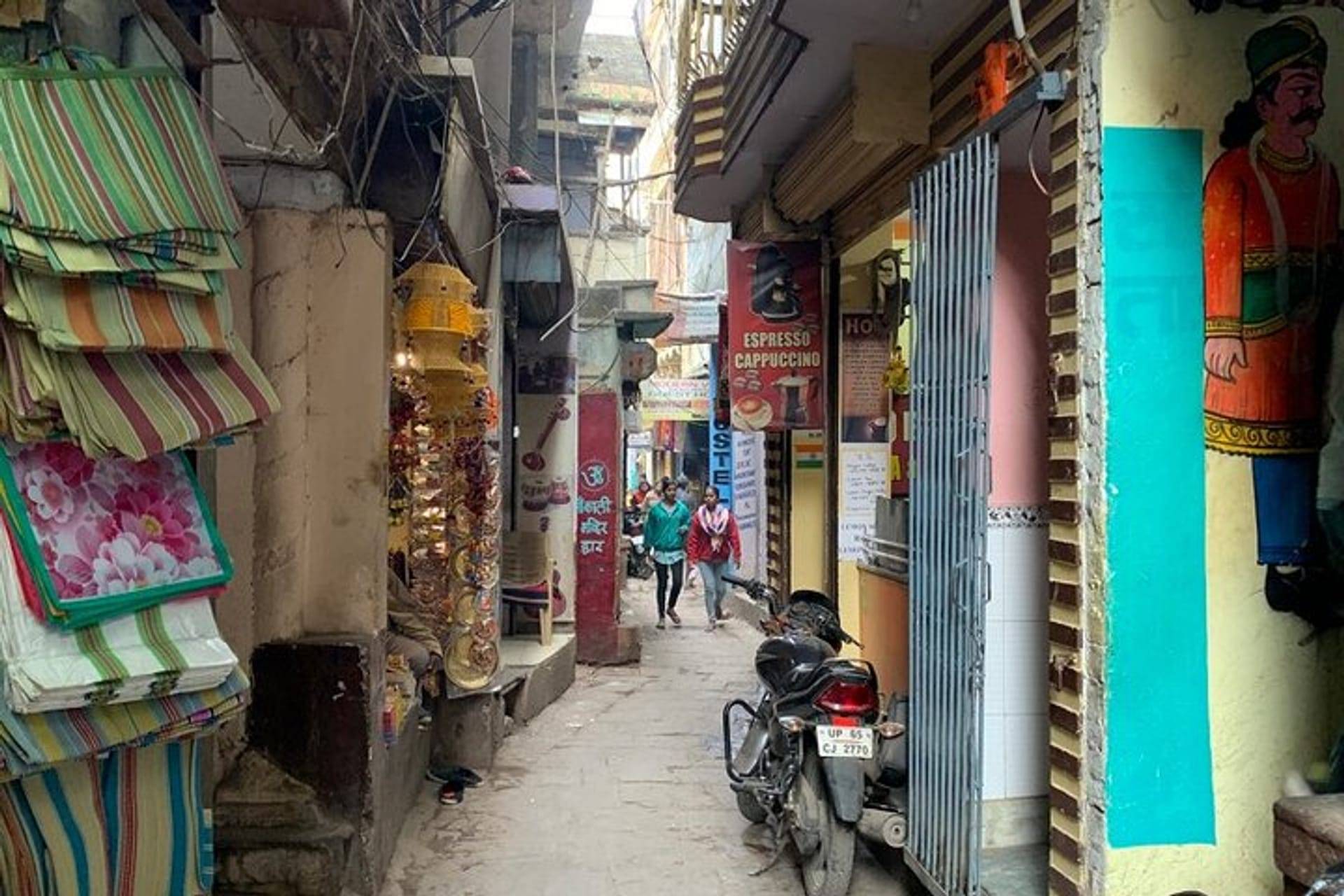
The honest truth is that most negative experiences foreigners report from Varanasi aren't the result of anything threatening. They're the result of being approached repeatedly by strangers with directions that lead somewhere you didn't intend to go, being quoted prices that bear no relation to reality, or simply walking deeper into the old city's lanes until the way out stops being obvious. These are inconveniences. Knowing they exist in advance makes them much easier to handle.
What Foreign Visitors Actually Find Difficult
Ask any experienced traveller who has been to Varanasi what they found hardest and the answer is rarely safety. It's usually one of these:
Practical Things That Actually Help
Most of what makes Varanasi feel safe and manageable comes down to a handful of practical decisions before and during the trip.
Know your arrival plan before you land. Varanasi Cantt railway station and Lal Bahadur Shastri Airport are both well outside the old city — the station is about 8 kilometres away, the airport is 14. Arriving without a pre-arranged car means negotiating a rate when you're tired, possibly after a long journey, with no benchmark for what's fair. A fixed-price private car sorted before you arrive removes this entirely.
Carry a downloaded offline map. Google Maps has limited accuracy in the old city lanes. Maps.me or a downloaded area on Google Maps will work when data doesn't. More importantly, knowing your ghat as a landmark beats knowing your address — Dashashwamedh, Assi, Manikarnika are names every driver and boatman understands.
Accept early that some things will not go to plan. The boat that was supposed to be at the ghat at 5:30 AM. The temple that's closed on the day you planned to visit. The lane that seemed short on the map but took twenty minutes to walk. Varanasi is a city that rewards flexibility. Visitors who hold their itinerary loosely consistently have better experiences than those who hold it tight.
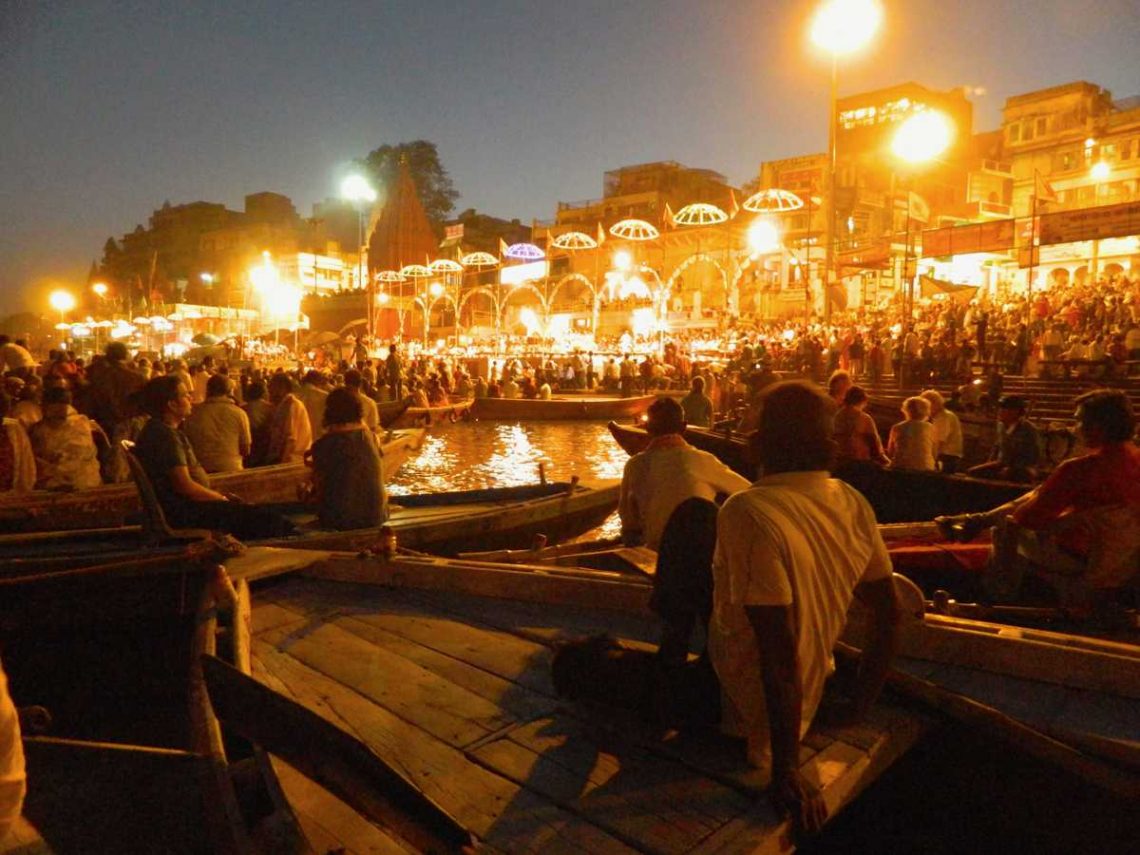
Go to the Ganga Aarti at Dashashwamedh Ghat. This sounds like generic tourist advice but there's a reason it's the single most common recommendation from every visitor. Watching the aarti from a boat on the river, rather than in the crowd on the ghat, changes the experience entirely. The view is better and the crowd pressure disappears.
The Difference a Local Guide Makes
There is a specific type of Varanasi experience that's available to visitors who come with good local knowledge, and a different type available to those who arrive without it. The gap between them is wider here than in most Indian cities, because Varanasi's depth isn't obvious. The city rewards being shown things, not just looking at them.
A good local guide doesn't just navigate the lanes. He tells you which temple to visit at which hour of the morning to avoid the crowd. He knows the boatman who won't overcharge. He can translate a pandit's explanation of what's happening at the cremation ghat in a way that turns something confronting into something you'll spend years thinking about. He takes you to the silk weaver whose workshop you'd never find on your own, and you buy something because you want to, not because you were steered there.
This is what Kashi & Kin was built around. Every guide we place with a visitor — we call them your Sāthi, which is simply Hindi for companion — is someone who grew up in or near Varanasi and knows the city the way only a local can. They speak English well. They're vetted by us personally. And they are, by design, on your side — there is no commission system, no shop partnerships, no detour that benefits anyone except you.
For foreign visitors specifically, this matters more than the headline might suggest. The touts don't approach you when you're walking with someone who is clearly local. The boat price is the local price. The lanes don't feel threatening when someone who knows them is with you. The difference isn't just comfort — it's the difference between the surface of Varanasi and everything underneath it.

For Solo Female Travellers Specifically
Varanasi gets a mixed reputation online for solo female travel, and some of it is warranted. Staring is common. Unsolicited conversation from strangers happens. The old city lanes at night require the same street awareness you'd use in any unfamiliar dense urban area anywhere in the world.
In practice, most solo women who travel to Varanasi find it manageable and many find it deeply rewarding. The ghat culture is unusually open — sadhus, pilgrims, foreign tourists and local families all share the same space in a way that's actually quite inclusive. The key, as almost every solo female traveller reports, is having someone to call or meet if something feels off. A guide, a hotel contact, or simply a friend who knows the city changes the baseline entirely.
Several women in our customer base have come to Varanasi alone specifically for the Kashi Vishwanath darshan or for a puja on the ghats. A Sāthi made the difference between doing it confidently and doing it anxiously — or, in some cases, not doing it at all.
Why Varanasi Is Worth It
All of this is worth saying because Varanasi genuinely is one of the most remarkable places in the world. It is one of the oldest continuously inhabited cities on earth. It sits at the centre of Hindu, Buddhist and Jain religious history. The Ganga here isn't just a river — it's the centre of an entire way of understanding life and death that has been practised on these ghats for more than three thousand years.
Foreign visitors who come prepared — with some knowledge of how the city works, with realistic expectations about the pace and the sensory environment, and ideally with someone who knows it well — consistently describe the experience as one of the most significant of their lives. That isn't an accident. It's what Varanasi does to people who give it the chance.