Most travellers arrive in Varanasi thinking they'll walk everywhere. That assumption usually survives about four hours. By the evening of the first day, most of them are either exhausted, stuck at a ghat they can't get away from, or standing on a road trying to negotiate a fair auto fare in a language they don't speak.
A private car changes all of this. Not because it's luxurious — though comfort matters in a city where the heat regularly touches 40°C — but because Varanasi's geography makes it genuinely necessary for anyone who wants to see more than one part of the city in a day.
Varanasi Is Much Larger Than It Looks
The mental image most visitors have of Varanasi is the old city: the ghats, the lanes, the temples clustered around Kashi Vishwanath. That part is real, and it's everything people say it is. But it represents maybe a fifth of what Varanasi actually is.
The airport is 14 kilometres from the old city. Varanasi Cantt station — where most trains arrive — is 8 kilometres. Sarnath, where the Buddha gave his first sermon and which holds some of the most important Buddhist ruins in Asia, is 10 kilometres from Dashashwamedh Ghat. Ramnagar Fort is across the river entirely. BHU's New Vishwanath Temple sits at the far southern end of a sprawling university campus.
None of these are walking distances, particularly in the summer months. And none of them are served by direct, reliable public transport that a first-time visitor can practically use.
Why Autos Don't Cut It
Auto-rickshaws are everywhere in Varanasi, and for a short hop within the old city they work fine. But for anything more ambitious, they come with a set of problems that compound quickly.
First: the negotiation. Every journey begins with a price discussion, and the opening quote for a foreign visitor or an obvious tourist is rarely the real one. This isn't a complaint about the drivers — it's simply how the market works. But negotiating a fare before every single transition between places adds up over three or four days into something genuinely tiring.
Second: the route. Auto drivers in Varanasi sometimes know a cousin's showroom, a government emporium, a silk shop that pays commission. A detour that takes ten minutes costs you nothing but time. Over the course of a trip, these detours add up into an itinerary you didn't plan.
Third: the limitations. Autos can't reach certain areas, can't carry a family with luggage comfortably, and aren't a practical option for a 3 AM departure for Mangala Aarti at Kashi Vishwanath or a very early morning sunrise boat ride. At those hours, you either have a car pre-arranged or you're improvising.
Why App Cabs Are Unreliable Here
Ola and Uber exist in Varanasi. They also cancel frequently, surge during peak times, and struggle with the old city's address system, which is based on landmarks and lane names rather than the kind of coordinates that map apps handle well.
In a larger metro, you'd simply request another ride. In Varanasi, at 5 AM on the morning you've planned a Ganga sunrise, two cancellations in a row means you've missed it. App cabs are a backup option, not a plan.

The Specific Moments Where a Private Car Makes the Difference
There are particular points in a Varanasi itinerary where not having a private car waiting goes from inconvenient to genuinely trip-altering:
What a Fixed-Price Private Car Actually Gives You
The difference between booking a car for each leg of your trip and having a dedicated private car for the day is partly logistical and mostly psychological.
With a dedicated car and driver, you stop thinking about transport. The car is there when you're ready. The driver knows the parking spots near which temple, the route to the station that avoids the worst bottlenecks, and roughly how much time to build in for each place. He's waited for you before. He'll wait again.
You are not looking at a map. You are not negotiating. You are not wondering if the next auto will agree to go where you want. You are simply visiting Varanasi.
For a first-time visitor in a city that can be disorienting even for seasoned travellers, that quiet reliability is worth significantly more than the fare difference between a private car and a series of autos.

What Kashi & Kin's Car Service Looks Like
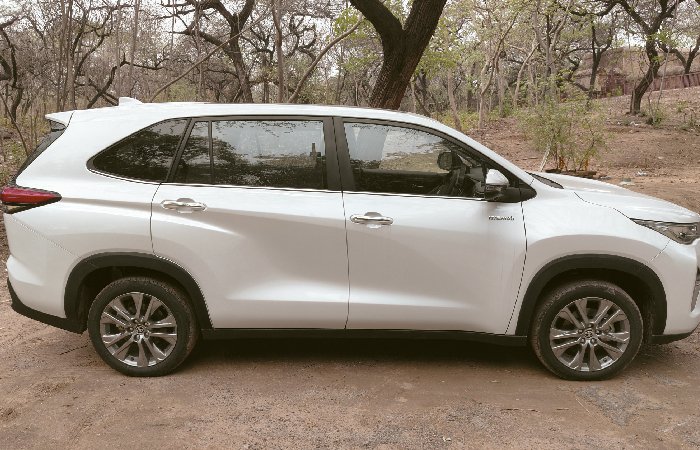
Our Varanasi car rental runs on a flat rate with no meter, no negotiation and no surprises. A small car is ₹2,499 for a full day. An Innova Crysta — the right choice for families, elderly travellers, or anyone who wants the extra space — is ₹2,899.
The driver knows Varanasi. He's been doing this for years and has driven routes to Sarnath, Ramnagar, the airport and every ghat more times than he can count. He speaks enough English to communicate, and he will not take you to a shop unless you ask him to.
Every Kashi & Kin package includes the car as standard — it's part of how the day works, not an add-on. If you've already sorted your accommodation and guide, the car is also available as a standalone hire.
It is, in our experience, the single logistics decision that has the largest impact on how a Varanasi trip actually feels.