Varanasi asks more of a visitor than most cities do. It is a place of worship before it is a destination, and a great deal of what happens on the ghats is not put on for anyone. Most of the difficulty people run into here comes from not knowing that, rather than from doing anything wrong on purpose.
This is a plain guide to what to do and what to avoid, arranged by the questions we are asked most often.
What to wear in Varanasi
Do cover your shoulders and knees. This applies at every temple, and it is sensible everywhere else in the city too. Loose cotton is the most comfortable choice for most of the year. Long trousers or a long skirt, and a top with sleeves, will get you into any temple in Varanasi without a conversation.
Do bring a scarf or a light shawl if you are a woman. It covers your head where that is expected, and it is useful at the aarti in the evening when the ghats cool down.
Do wear shoes you can slip off easily. You will remove them many times in a day, at temples and sometimes at doorways. Sandals or slip-ons save a great deal of bending.
Don't wear shorts, short skirts, or sleeveless tops if temples are on your itinerary. You will be turned away at the gate, and there is nowhere convenient to change.
Don't bring leather belts, wallets, or bags to temples. Leather is not permitted inside many Hindu temples because the cow is sacred, and Kashi Vishwanath in particular will stop you at security for a leather belt with a metal buckle.
Kashi Vishwanath Temple dress code and what you cannot carry inside
This is the strictest place you will visit in Varanasi, and it is worth arriving prepared.
The dress code requires arms and legs covered. Traditional Indian clothing is not compulsory and Western clothing is accepted, so long as it is modest. Jeans are generally fine. Shorts are not.
Do leave everything you can at your hotel. The following are not permitted inside the temple:
- Mobile phones
- Cameras of any kind
- Smartwatches and power banks
- Leather items, including belts and wallets
- Belts with metal buckles
- Shoes and footwear
- Cigarettes, lighters and matches
- Large bags
Lockers and cloakrooms are available near the gates for a small charge, but the queues for them are long at busy hours. Carrying nothing is faster than storing something.
Don't expect to take a photograph of the Jyotirlinga. Photography inside the temple is not allowed, and security is thorough. There is frisking at more than one point on the way in.
Temple rules are set by the Shri Kashi Vishwanath Temple Trust and do change, particularly during Sawan and around major festivals when crowd management measures are added. Confirm current rules before you travel. Our darshan arrangements cover the queue and the timing so you are not working this out at the gate.
Can non-Hindus enter Kashi Vishwanath Temple?
Yes. People of all faiths and all nationalities are permitted to enter Kashi Vishwanath Temple. There is no restriction on entry by religion.
The same dress code and the same restrictions on what you can carry apply to everyone. Foreign visitors should carry a passport, as identification is sometimes checked at security.
A few smaller temples elsewhere in India do restrict entry to Hindus, which is where the confusion comes from. Kashi Vishwanath is not one of them.
Photography at the ghats, and why Manikarnika is different
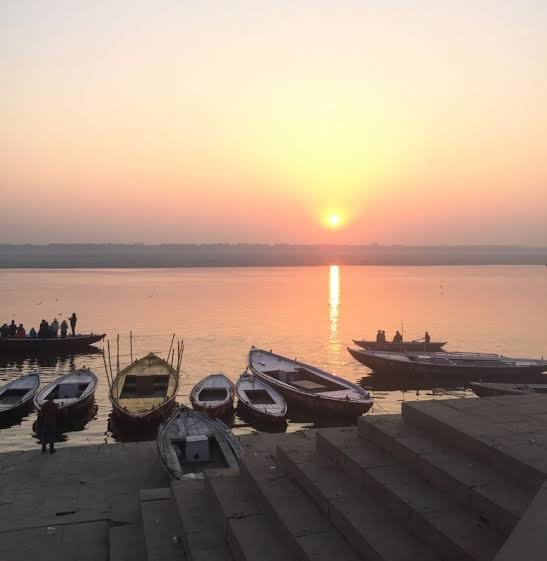
Do photograph the ghats, the boats, the river, the buildings and the morning light. Nobody minds, and it is one of the most photogenic places in India.
Do ask before photographing a person, particularly sadhus and particularly during prayer. Some sadhus will pose and then ask for money, which is a transaction rather than a scam, but you should know it is coming before you raise the camera.
Don't photograph or film at Manikarnika Ghat or Harishchandra Ghat. These are cremation grounds, and what you are looking at is a family's last rite for someone they have lost. It is prohibited, it causes genuine distress, and it can provoke a confrontation.
Don't photograph cremation from a boat either, at any distance. Being on the water does not make it acceptable, and it is visible from the shore.
Do stand and watch respectfully at a distance if you wish to. Nobody objects to your presence at Manikarnika. It is the camera that causes offence, not the visitor.
Is Varanasi safe for tourists?
Yes, in the ordinary sense. Violent crime against visitors is rare, and the city is used to foreigners and to pilgrims from every part of India. What you should expect instead is persistence — people offering to guide you, sell you something, or take you somewhere — and some overcharging.
Do keep your bag in front of you in dense crowds at the aarti or during festivals, as you would anywhere with large numbers of people.
Do walk the lanes of the old city during the day if you want to explore. They are safe and they are the best part of Varanasi. Do accept that you will get lost, because everyone does.
Don't follow anyone who approaches you at the railway station or airport offering a hotel, a taxi or a guide, however plausible they sound. Arrange transport before you arrive.
Don't walk the ghats alone late at night, particularly the quieter stretches south of Assi. There is nothing sinister there, but the steps are uneven, unlit in places, and a fall is the real risk.
Is Varanasi safe for solo female travellers?
Many women travel here alone without difficulty. The sensible precautions are the ordinary ones for India rather than anything specific to Varanasi.
Do dress conservatively, which reduces unwanted attention considerably.
Do arrange transport in advance rather than taking an unmetered auto-rickshaw after dark.
Do stay near the ghats, where there are people about at most hours, rather than in an isolated guesthouse.
Don't feel obliged to be polite to persistence. A firm, uninterested no, repeated without engaging further, works better here than an explanation.
How visitors get overcharged in Varanasi
This is the most common complaint about the city, and it is worth naming the specific situations rather than being vague about them.
The boat that costs more at the end than at the start. A price is agreed at the steps, and once you are on the water it becomes a price per person, or the route becomes shorter than described, or a tip is expected that is larger than the fare.
The guide who appears at a temple. Someone attaches themselves to you at the entrance, provides commentary you did not request, and asks for a substantial fee afterwards.
The donation for firewood. A visitor at Manikarnika is told that a donation buys wood for the cremation of the poor. This is not how cremation at Manikarnika is funded.
The shop on the way. A driver stops at a silk emporium or a handicraft showroom that was not part of the journey. The stop exists because the shop pays the driver a commission on whatever you spend.
Do agree a total price, in writing or by message, before anything begins. Ask specifically whether the figure is for the boat or for each person.
Don't pay in full in advance to someone you met on the ghats.
How much should a boat ride in Varanasi cost?
There is no single published rate, which is exactly why the numbers vary so much. A shared boat at sunrise is inexpensive. A private boat for an hour costs several times that. During Dev Deepawali and other major festivals, prices on the day run many times the ordinary rate because demand far exceeds the number of boats permitted on the water.
Do ask what is included: how long, which ghats, private or shared, and whether the figure covers the whole boat.
Don't judge by the opening figure alone. The lowest price quoted at the steps is frequently not the price paid at the end.
Our sunrise boat ride and evening aarti boat are both priced in full before you book, including GST.
Can you swim in the Ganga at Varanasi?
Don't swim in the river at Varanasi. Pilgrims take a ritual dip, which is a brief immersion with a purpose, and that is a different thing from swimming. Water quality at the ghats is poor, the current is stronger than it appears, and the river bed drops away sharply in places.
Don't drink the river water or put it in your mouth during a dip.
Do take Ganga water home in a sealed container if you wish. It is an old and ordinary practice, and containers are sold everywhere near the ghats.
Food and water
Do drink only sealed bottled water, and check the seal.
Do eat the street food, and eat it where there is a queue of local people. High turnover matters more than appearance. Kachori sabzi in the morning, chaat in the afternoon and a Banarasi paan afterwards are part of being here.
Don't take ice in drinks from stalls, or cut fruit that has been sitting out.
Don't eat a heavy meal before a sunrise boat ride. An early start on the water is better on an empty stomach.
Conduct at the ghats and temples
Do remove your shoes before entering any temple, and before stepping onto some shrines and platforms at the ghats.
Do walk clockwise around a shrine if you are circling it. This is the direction observed in Hindu practice.
Do give way to funeral processions in the lanes. They have right of way, always, and they move quickly.
Don't point your feet at a deity, a shrine, or a person seated in prayer. The feet are considered unclean, and this is one of the few gestures that causes real offence without a word being said.
Don't touch anyone's head, including children's, and don't touch offerings or an idol unless you are invited to.
Don't hand anything to anyone with your left hand.
Don't bring alcohol to the ghats or the temples, and don't come to either having had a drink.
Arriving and getting about
Do arrange your airport or station transfer before you land. The approach at both is crowded and the people who find you there are not the people you want to go with.
Do accept that cars cannot reach the ghats. Vehicles stop at Godowlia or the Assi end and the rest is on foot. Anyone who promises to drive you to Dashashwamedh Ghat is not telling you the truth.
Don't plan more than two major sites in a morning. Distances here are short but journey times are not, and an ambitious itinerary usually collapses at the second stop.
The short version
- Cover your shoulders and knees
- Carry nothing to Kashi Vishwanath, especially not your phone or a leather belt
- No photographs at the cremation ghats, from land or from the water
- Agree a total price before anything starts, and ask if it is per person
- Sealed water only, and eat where the queue is
- Shoes off, feet away from shrines, right hand for giving
- Arrange your transport before you arrive
If you would rather not think about any of this
Most of the difficulty above comes down to two things: not knowing what is expected, and not knowing what something should cost.
Kashi and Kin exists to remove both. Our prices are printed before you book, GST included, and the figure you are quoted is the figure you pay. Payment is settled before you arrive, so nothing is asked for on the ghats, on the boat, or at the temple gate. There are no commission stops at silk shops, because the drivers we work with are paid properly by us instead.
Our Sāthi guides work across fifteen languages and will tell you what you are looking at, what is happening, and why — which is the part of Varanasi that a guidebook cannot give you. You can see what we offer on our services page, or look at our packages if you would like the whole visit arranged.