Lal Bahadur Shastri International Airport sits at Babatpur, around 25 to 26 kilometres from the ghats. The drive takes forty to fifty-five minutes on a good run, longer in the evening, and longer again during festival weeks when the approaches to the old city are barricaded.
It is not a difficult journey. It is, however, the point at which more visitors' trips go wrong than at any other, and almost always for the same handful of reasons.
Your four options, honestly
The prepaid counter is inside the arrivals hall, to the left of the exit, with vehicles waiting in the first lane. You state your destination, pay a fixed government-approved fare, and receive a slip with the driver's name and vehicle number. The fare is all-inclusive and there is nothing to negotiate. This is the sensible default for a daytime arrival, and if anyone tells you the counter is closed, walk in and check for yourself.
App cabs operate from a marked rideshare bay outside the terminal. For a midday arrival, with a working Indian SIM, going somewhere a car can actually reach, they are perfectly good and usually the cheapest option. Fares to the ghat area typically run in the region of four to seven hundred rupees, though this rises steeply at peak arrival times.
Walk-in taxis outside arrivals are negotiated on the spot. You will pay more than the prepaid rate and you have no recourse if something goes wrong.
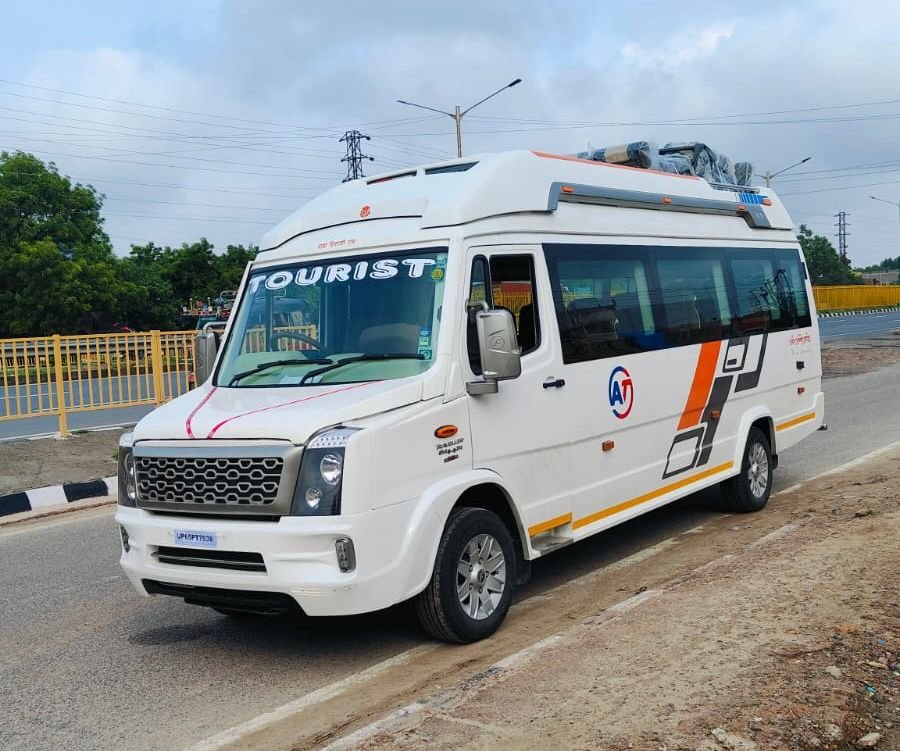
Pre-booked transfer means a named driver waiting for you with your flight tracked and the price fixed in advance. It costs more than an app cab on a good day and less than an app cab on a bad one.
Fares at Varanasi airport change and published figures go stale quickly. Treat any number you read online, including these, as indicative.
Why app cabs struggle at this airport in particular
The problems people report are not really about the companies. They are structural, and understanding the mechanism tells you when to rely on an app and when not to.
The drivers own the vehicles. An app is a dispatch layer; it does not own a fleet, does not maintain the cars and does not inspect them. Whoever accepts your ride brings whatever car they own, in whatever condition their margins allow them to keep it. Some are immaculate. Some have not had the seats repaired in years and the air conditioning has been off for a season. There is no standard because there is no mechanism to enforce one, and you find out which you have when it pulls up.
Long airport trips are unattractive to drivers. Twenty-five kilometres out to Babatpur, then a strong chance of returning empty. This is why cancellations cluster on airport runs, and why they tend to come after you have already waited.
Supply collapses at night. Availability is good through the day and thins considerably late evening and early morning — which happens to be when a large share of international and connecting flights arrive. Two in the morning at VNS is precisely when the app is least likely to find you a car, and precisely when you least want to be standing outside an unfamiliar terminal working it out.
Surge lands on exactly the arrivals you cannot move. Peak arrival banks and festival weeks are when multiples apply, and a flight lands when it lands.
The problem nobody mentions: you may not be able to book at all
To order an app cab you need mobile data. To have mobile data you need an Indian SIM. Foreign visitors do not have one when they land, and getting one at the airport is not always quick or possible at three in the morning.
Airport wifi exists and often works. It also often does not, and app verification frequently requires an SMS to an Indian number regardless. A great many foreign arrivals discover at the rideshare bay that the plan they made from home does not function.
If you are arriving from abroad, do not make your only transport plan one that requires connectivity you do not yet have.
The drop-off problem
This one catches almost everybody, and it has nothing to do with which service you choose.
No vehicle can reach the ghats. Cars stop at Godowlia crossing, at the Assi end, or at whichever approach road is open, and the rest is on foot through the lanes. If you have booked a guesthouse near Dashashwamedh, your car stops somewhere between five and fifteen minutes' walk away, and you carry your luggage the rest.
An app driver who has never taken a foreign visitor to that address will drop you at the nearest point his map recognises and leave. At one in the morning, with luggage, in lanes that all look identical, that is a genuinely bad twenty minutes.
During Dev Deepawali, Sawan and other festival periods the closures extend much further out, and where a car can stop changes from day to day.
Before you travel, ask your accommodation two questions: where exactly can a vehicle stop, and how far is the walk from there.
What to do about it
Arriving between about eight in the morning and eight at night, with a working Indian SIM, going to Cantt or a hotel on a main road: use the prepaid counter or an app. There is no reason to spend more.
Arriving late at night or early in the morning: book in advance. This is the single situation where pre-booking earns its cost outright.
Arriving from abroad without an Indian SIM: book in advance.
Staying near the ghats: book in advance, or at minimum know where the car stops before you land.
Travelling with elderly parents, small children, or a lot of luggage: book in advance.
Arriving during a festival: book in advance, and expect the drop-off point to be further out than usual.
Questions worth asking before you pay anyone
- Is the price fixed, and does it include GST, tolls and parking?
- Will you send the driver's name and number before the day?
- Do you track the flight? What happens if it is delayed three hours?
- Where exactly will the car stop, and how far is the walk to my accommodation?
- What happens if the driver does not arrive?
An operator who cannot answer the third and fourth questions has not thought about the two things most likely to go wrong.
How we handle airport transfers
We arrange transfers both ways, and the arrangement is built around the failure points above rather than around the drive itself, which is the easy part.
The price is fixed before you book, GST included, and settled in advance. No surge, no night charge, no luggage charge, and nothing asked for when you arrive. A delayed flight does not change the figure.
We track the flight. If you land three hours late at two in the morning, the driver is there at two in the morning. This is the whole reason people pre-book, and it is the thing an app cannot do.
You get the driver's name and number in advance, so you are not scanning a crowd of placards wondering which one is yours.
We tell you where the car actually stops and how far you will walk, before you travel rather than when you arrive. During festival weeks the drivers we work with know which approaches are open that night, which is the difference between a five-minute walk and a forty-minute one.
No commission stops. The car goes to your hotel and nowhere else. The drivers we work with are paid properly by us for the journey, so there is no silk emporium on the way.
Full details and current fares are on our Varanasi airport taxi page. If you would like the transfer alongside the rest of your stay, see our packages, and our services page covers city hire and outstation journeys.
One last thing about the return
For a departure, leave the ghats three hours before your flight. Two is usually enough. Three means you are not the person watching the clock in traffic near Lahartara with a boarding gate closing.
Early morning departures are the easiest journey of the whole trip — the roads are empty and the run takes forty minutes. It is the afternoon and evening flights that need the buffer.