Every February, special trains run from Punjab to Varanasi and flights fill from Birmingham, Toronto and Vancouver. Hundreds of thousands of people converge on a neighbourhood behind Banaras Hindu University that most visitors to this city have never heard of.
They are going to Seer Govardhanpur, where Guru Ravidas was born, for the one day of the year that matters most to the community that follows him.
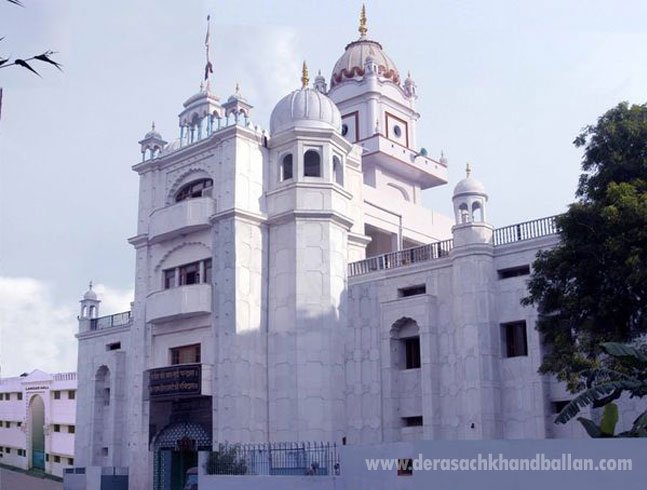
Shri Guru Ravidas Janam Asthan at Seer Govardhanpur, behind the BHU campus.
Guru Ravidas Jayanti 2027
Saturday, 20 February 2027.
The date follows Magh Purnima, the full moon of the month of Magh, so it moves each year. Observances at Seer Govardhanpur run for several days around it rather than on the day alone.
Who Guru Ravidas was
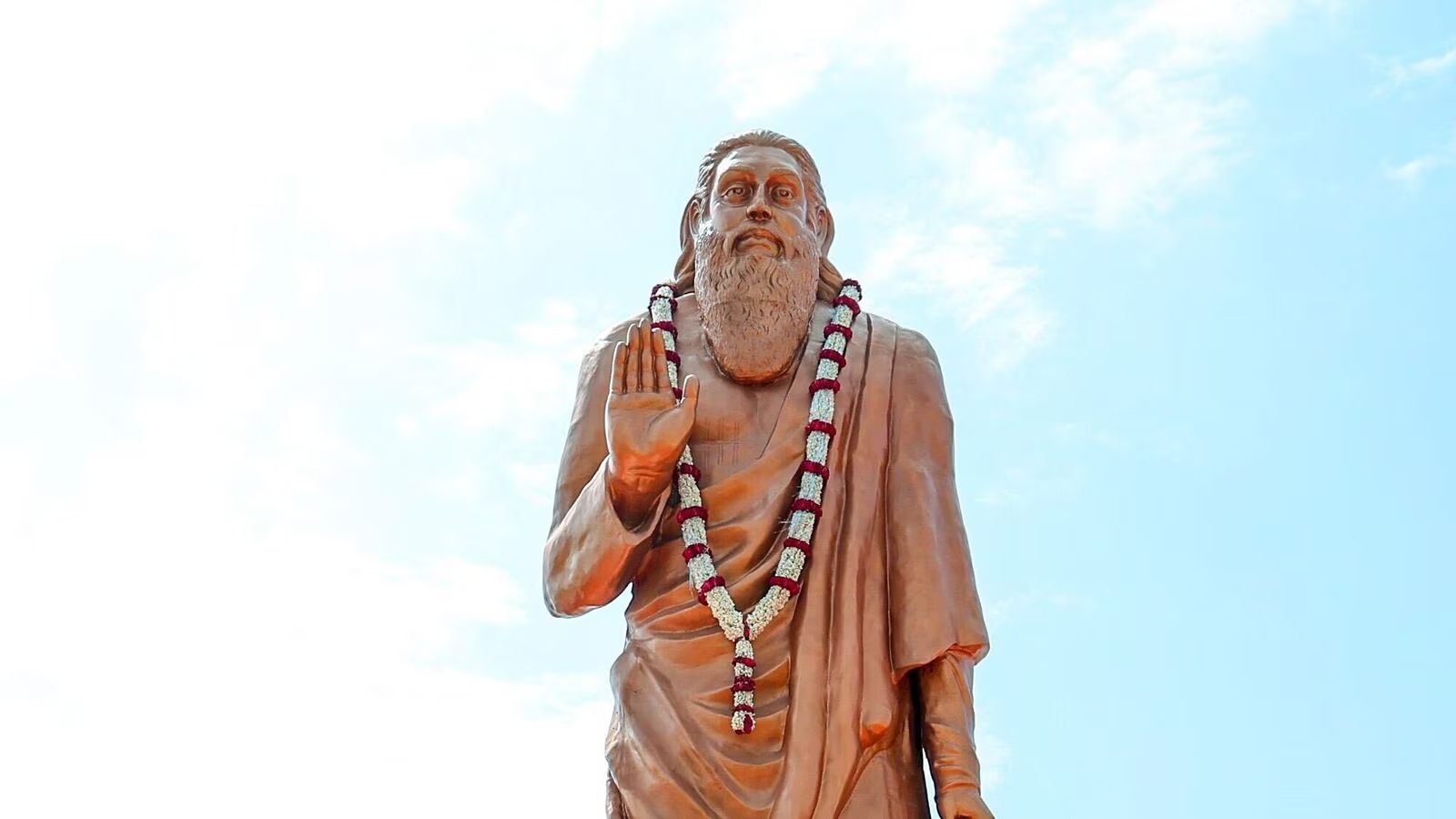
A poet-saint of the Bhakti movement, born in Varanasi in the fifteenth century, and a contemporary of Kabir in the same city.
He was born into a leather-working family — an untouchable caste in the order of his time — and he never disowned that work or that origin. He wrote from inside it. What he built from there was a body of devotional poetry arguing that caste has no standing before God, that the divine is reached through devotion rather than birth or ritual, and that a person's worth is not fixed by the circumstances of their arrival.
His best-known idea is Begumpura — the city without sorrow. It describes a place with no grief, no tax, no fear, no second class and no hierarchy, where all move as they wish. Written in the fifteenth century by a man the society of his day considered untouchable, it remains one of the most striking pieces of political imagination in Indian literature.
Forty of his hymns are included in the Guru Granth Sahib, which is why Guru Ravidas is revered across Sikh tradition as well as by his own followers, and why the Janam Asthan will feel familiar to anyone who has been in a gurdwara.
Who comes
The Janam Asthan is the principal pilgrimage site for the Ravidassia community, and for Ad-Dharmis, Ramdasia Sikhs and many other communities across Punjab, Haryana, Himachal and beyond.
It is also, and this is what makes the Jayanti what it is, a site of enormous importance to the diaspora. Followers in the United Kingdom, Canada, the United States, Italy and elsewhere have funded the temple's expansion for decades, and many travel back for the Jayanti specifically. The connection to Dera Sachkhand Ballan in Jalandhar runs through all of it.
The temple
Building at the birthplace began in the 1960s, and the site has been expanded and rebuilt repeatedly since, funded almost entirely by devotees.
It is white, with a golden dome, and much of what it holds was given as offering — including a gold palanquin weighing around 130 kilograms, carried in procession. A monumental gateway marks the approach.
It is open to everyone regardless of faith or background, and there is no entry charge. Langar — the free community meal — is served, and during the Jayanti it runs continuously for days.
How the Jayanti is kept in Varanasi
The Nagar Kirtan. A procession moves through the city with the Guru Granth Sahib carried at its head, accompanied by kirtan, banners, and devotees walking in large numbers. Some dress in the manner of Guru Ravidas. It is the most visible part of the observance and it draws the largest crowds.
Continuous recitation and kirtan at the Janam Asthan through the days around the full moon, with the Guru Granth Sahib read in full.
The dip in the Ganga. Many devotees bathe at Ravidas Ghat, on the southern stretch of the riverfront, which is held to be where Guru Ravidas meditated. It is named for him and it is a quieter, less visited part of the ghats for most of the year.
Langar, served without pause and without charge to anyone who arrives — which given the numbers is an extraordinary operation in itself, and is entirely run by volunteers.
Ravidas Park, adjoining the complex, absorbs a good part of the crowd and hosts gatherings through the period.
Langar runs continuously through the Jayanti, staffed by volunteers.
Practical matters
Where it is. Seer Govardhanpur, immediately behind the BHU campus on the southern edge of the city. Around 6 km from Dashashwamedh Ghat, 3 km from Assi Ghat, and 30 km from the airport.
Entry is free, as is langar. Nobody sells tickets to any part of this.
Cover your head before entering, and remove your shoes. Cover shoulders and knees. If you have been in a gurdwara, the conventions are the ones you know.
Accommodation. Varanasi fills for the Jayanti and rooms near the site go early. Book well ahead, and consider staying near Assi Ghat, which is the closest part of the riverfront and a pleasant place to be for the rest of your stay.
Crowds and roads. Traffic around Seer Govardhanpur and along the Nagar Kirtan route is heavily restricted on the day. Expect to walk the final stretch.
Arrive early for the procession. The route fills long before it passes.
Making a trip of it
Most people come for the Jayanti and stay two or three days, which is sensible — you have travelled a long way to a city worth more than one afternoon.
Ravidas Ghat and the walk north along the riverfront towards Assi. Banaras Hindu University, immediately adjacent, with its temple and the Bharat Kala Bhavan museum. Sarnath, where the Buddha gave his first sermon, half an hour away. And the ghats themselves at sunrise, which is the thing everyone remembers about Varanasi regardless of why they came.
How Kashi and Kin can help
Most of what makes this trip difficult is logistical rather than spiritual, and all of it is the kind of thing we handle.
Airport and station transfers. For families arriving from abroad, often late at night, often with elderly relatives, this is the part that most often goes wrong. A named driver, the flight tracked, waiting whatever time you land.
Transport to Seer Govardhanpur and back, including on the Jayanti itself when roads close and the drop-off point moves. The drivers we work with know which approach is open on the day.
A Sāthi alongside you. Our guides work across fifteen languages. For families where the elders speak Punjabi and the younger generation has grown up abroad, having someone who can move between both is worth more than a guidebook.
The rest of the stay arranged — the sunrise boat, the ghats, Sarnath, BHU — so the days around the Jayanti are not spent negotiating with auto drivers.
Everything is priced before you book, GST included, and settled before you arrive. Nothing is asked for on the ground, and there are no commission stops at silk shops on the way to anywhere. For families visiting a place of langar and open kitchens, being asked for money at every turn by the city outside is a particularly jarring contrast, and it is the thing we exist to remove.
See our services or packages, or write to us at namaste@kashiandkin.com. If you are planning for February 2027, contact us early — the city fills and so do we.
Festival dates follow the lunar calendar and observances are organised by the temple trust. Confirm timings closer to the date.