Short answer: yes, but not for the reasons most people think.
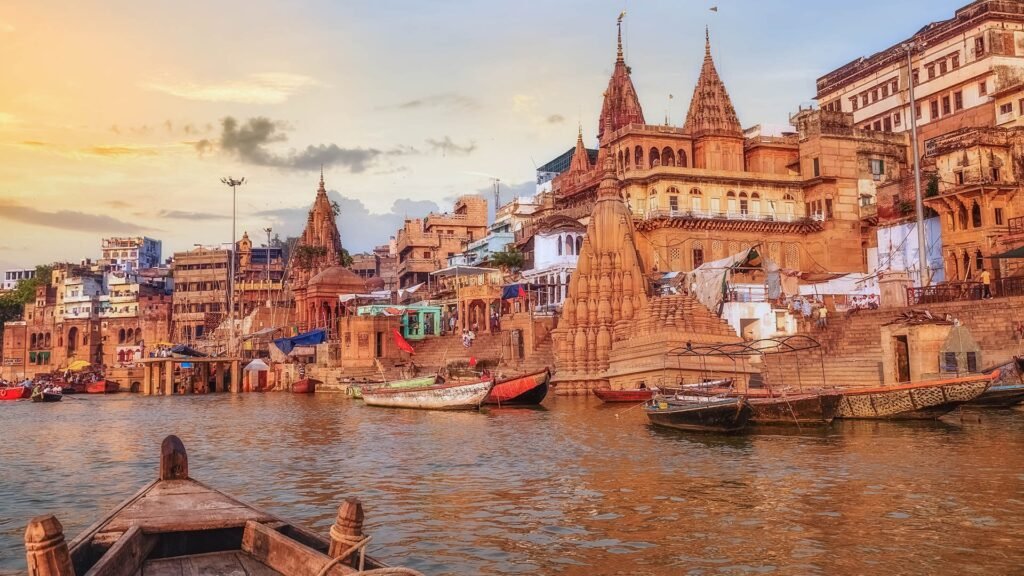
The old city — the ghats, Vishwanath Gali, the ancient lanes that have grown tighter for centuries — is genuinely unwalkable by car. No cab follows you there. But Varanasi is far larger than its famous riverfront, and the rest of it requires one.
Most first-time visitors arrive planning to walk everywhere. That plan usually lasts about half a day. The truth is that Varanasi has two cities sitting on top of each other: the old city where no car can follow you, and a much larger newer city that spreads several kilometres in every direction and requires one. If you only have three or four days here, the difference between having a car and not having one is the difference between seeing one Varanasi and seeing both.
The Distances Are Larger Than They Look on a Map
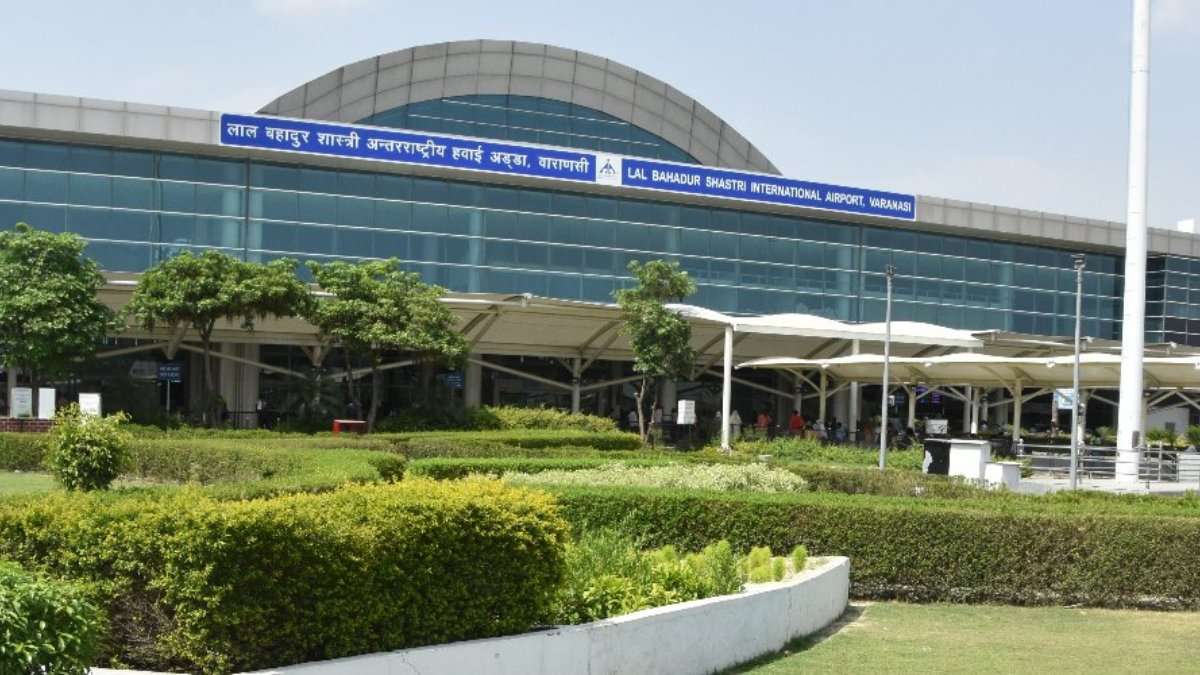
Varanasi Cantt railway station, where most visitors arrive, is nearly eight kilometres from the old city. The airport is fourteen. Sarnath — where the Buddha delivered his first sermon and which holds some of the most important Buddhist monuments in Asia — is ten kilometres from the ghats. Ramnagar Fort, on the eastern bank of the Ganga, requires crossing the river entirely. BHU's New Vishwanath Temple sits at the southern end of a sprawling university campus.
None of these are walking distances in a city where the temperature regularly sits above 38°C from April through June, and where the humidity in the monsoon months makes outdoor exertion genuinely unpleasant after about twenty minutes.
The distances also look deceiving because Varanasi's roads don't run in straight lines. The route from one place to another is rarely the route you'd expect.

Autos Are Fine. Until They Aren't.
Auto-rickshaws are everywhere in Varanasi and for short hops they work well. But they come with the standard northern Indian shared-ride experience: negotiation before every journey, a meter that exists mostly for decorative purposes, routes that occasionally take in a cousin's shop, and the baseline uncertainty of not quite knowing what you'll pay until you've arrived.
For a first-time visitor who is already managing the sensory overload of the old city, adding a fare negotiation to every transition between places adds up. By the afternoon of the second day, most people find it tiring in a way they didn't expect.
Cycle rickshaws are slower still, genuinely uncomfortable over longer distances, and should not be used for anything more than a lane-to-lane hop within the old city — which is, frankly, their correct use.
App cabs (Ola, Uber) exist in Varanasi and work intermittently, with driver cancellations and surge pricing during peak times that can make them less reliable than they'd be in a larger metro.
The Specific Situations Where You Really Need a Car
Not every moment in Varanasi requires one. The ghat walk, the lanes around Kashi Vishwanath, the morning aarti — these are on foot, and there's no other way to do them properly. But there are specific situations where a car goes from convenient to genuinely necessary:
- Airport and station transfers with luggage. You don't want to be negotiating a rate with four bags at 5 AM.
- Sarnath. The distance is manageable, but the combination of traffic on the highway and the lack of direct public transport makes it a frustrating trip without a fixed arrangement.
- Early morning darshan at Kashi Vishwanath. Mangala Aarti begins at 3 AM. Even the 4 AM session requires you to be at the temple before the city has fully woken up. A private car waiting for you is simply the difference between doing this or skipping it.
- Evenings after the Ganga Aarti. Dashashwamedh Ghat empties thousands of people into the surrounding lanes simultaneously. Having a car parked nearby removes a genuinely chaotic exit.
- Ramnagar Fort. Crossing the river by road takes you well out of the old city. Without a fixed car, getting back becomes an improvised exercise.
- Travelling with elderly family members or children. The lanes are beautiful but uneven, and walking them requires stamina that not everyone has.
What a Fixed-Price Private Car Actually Gives You
The difference between hiring a random cab for each leg and arranging a dedicated private car for your trip is partly about money and mostly about mental load.
With a fixed arrangement, the car is there when you need it. The driver knows the city. He knows which parking spots work near which temple, which route to the station avoids the worst bottlenecks, and roughly how long you should allow for each. You're not looking at Google Maps trying to figure out if the thing the app is showing you as a road is actually a road.
For a first-timer in a city that can be genuinely disorienting, that quiet reliability is worth more than the fare.
Kashi & Kin's chauffeured car service runs at a flat rate with no meter, no negotiation and no surprises — a small car for ₹2,499 or an Innova for ₹2,899, with a driver who knows Varanasi. It's part of every package we run, and it's also available as a standalone hire for visitors who've already sorted their own accommodation and guide. See how it works →
The One Thing to Know About Varanasi Traffic
Varanasi has no metro, no local train and no organised bus network that a first-time visitor can practically use. The main roads through the city centre — Godowlia, Lahurabir, Lanka — are narrow and shared with pedestrians, bikes, handcarts, cattle and the occasional wedding procession. Traffic at peak hours is genuinely slow.
This isn't a complaint. It's just useful to know before you assume that "a quick cab ride" will be quick. Build in more time than you think you need, especially for anything in the late morning or early evening when the roads are at their fullest. A driver who knows the city will also know the back routes, which makes a material difference.

A Practical Note on Arriving and Leaving
If you're arriving by train at Varanasi Cantt, the pre-paid auto booth outside the station is the most reliable option if you don't have a car pre-arranged. Fix the fare at the booth, not with a driver waiting outside it.
If you're flying in, the airport is far enough from the city that an auto is not a sensible option with luggage. Arrange a pickup in advance.
Leaving Varanasi follows the same logic. Train departures from Cantt before 7 AM — common for visitors connecting to Delhi or Kolkata — happen before the auto market is fully awake. Don't assume you'll find something easily at 5 AM. Arrange it the night before.
Varanasi rewards the visitor who arrives with fewer assumptions and more flexibility than usual. The city will surprise you in ways you can't plan for. The logistics, you can. Sorting your car is the easiest one.